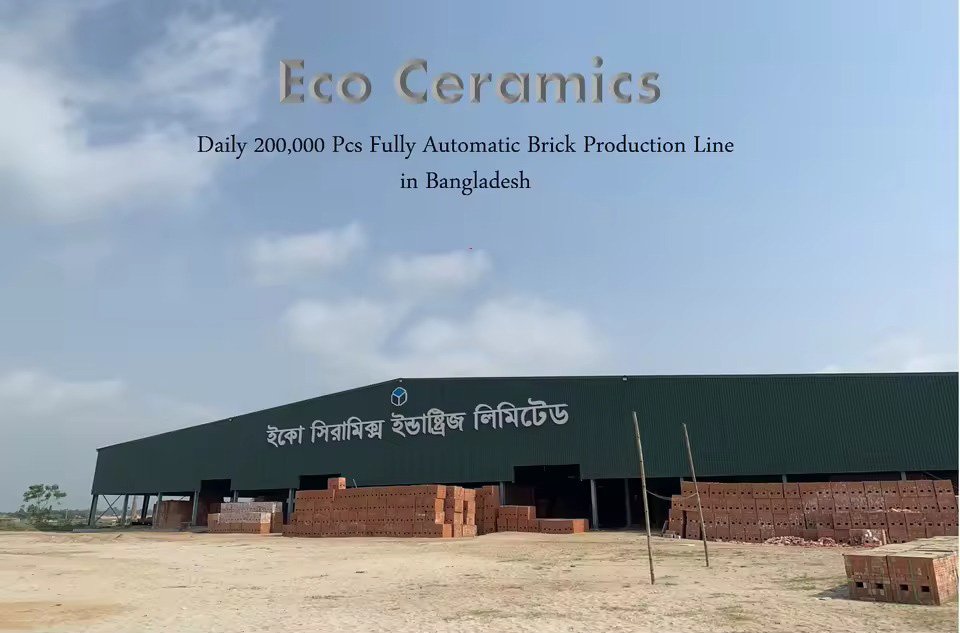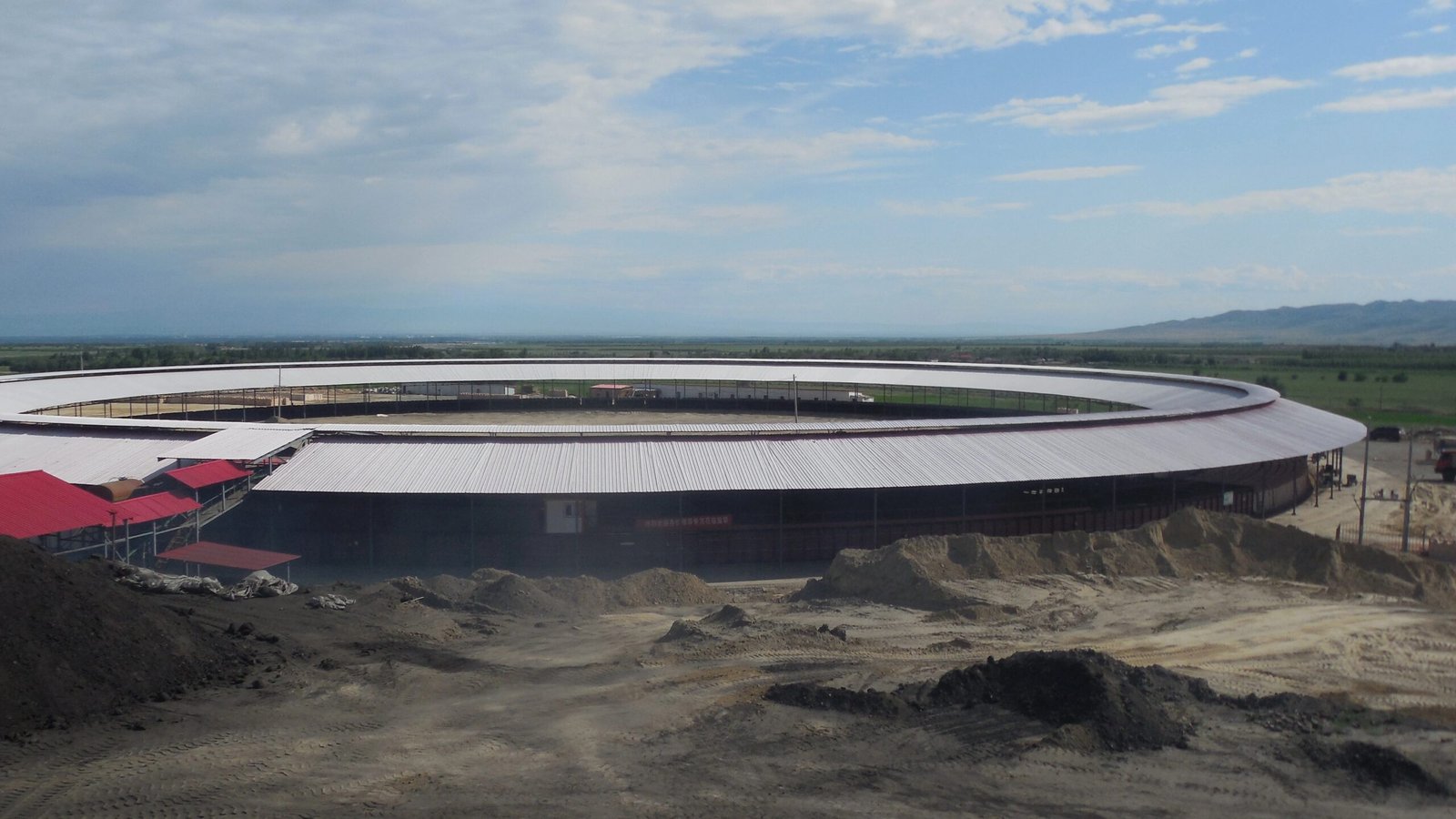
Brick Manufacturing Machine: Complete Guide to Production Equipment and Process in South Africa
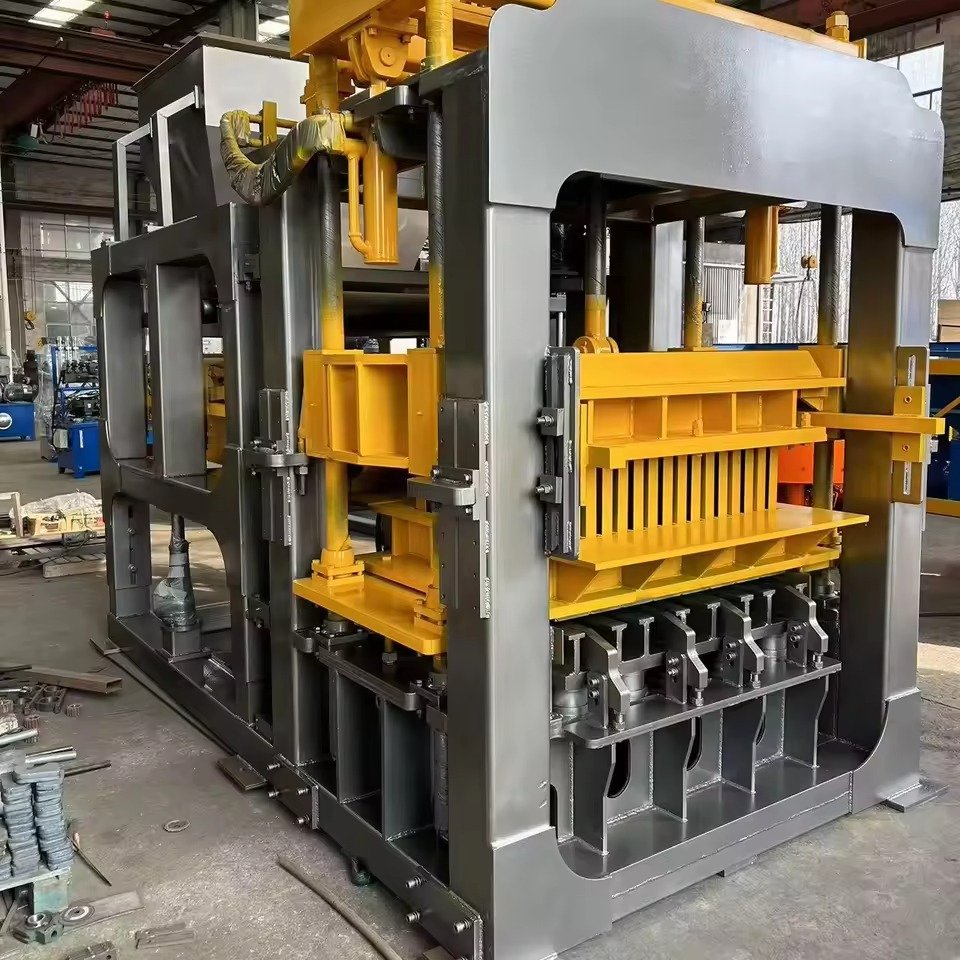
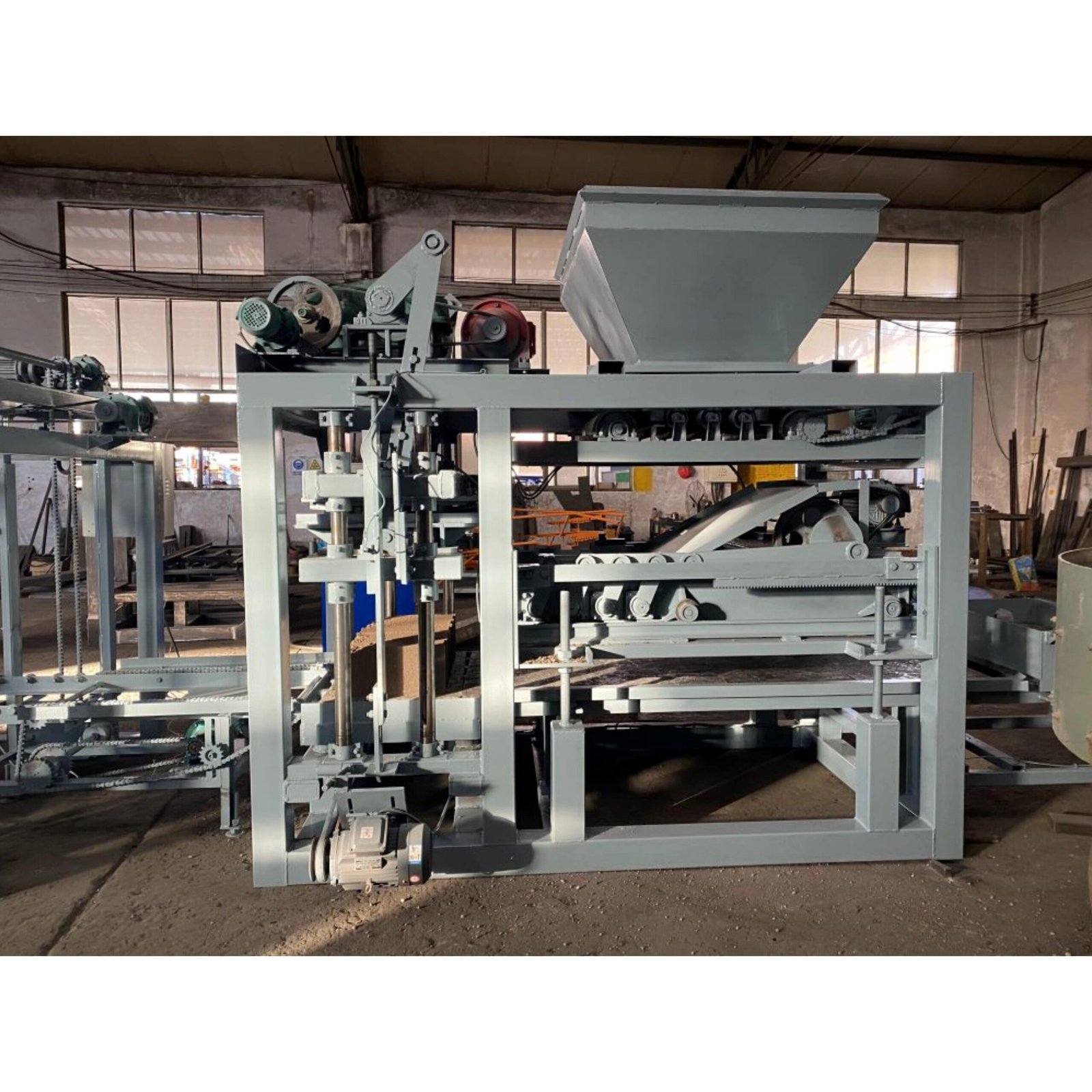
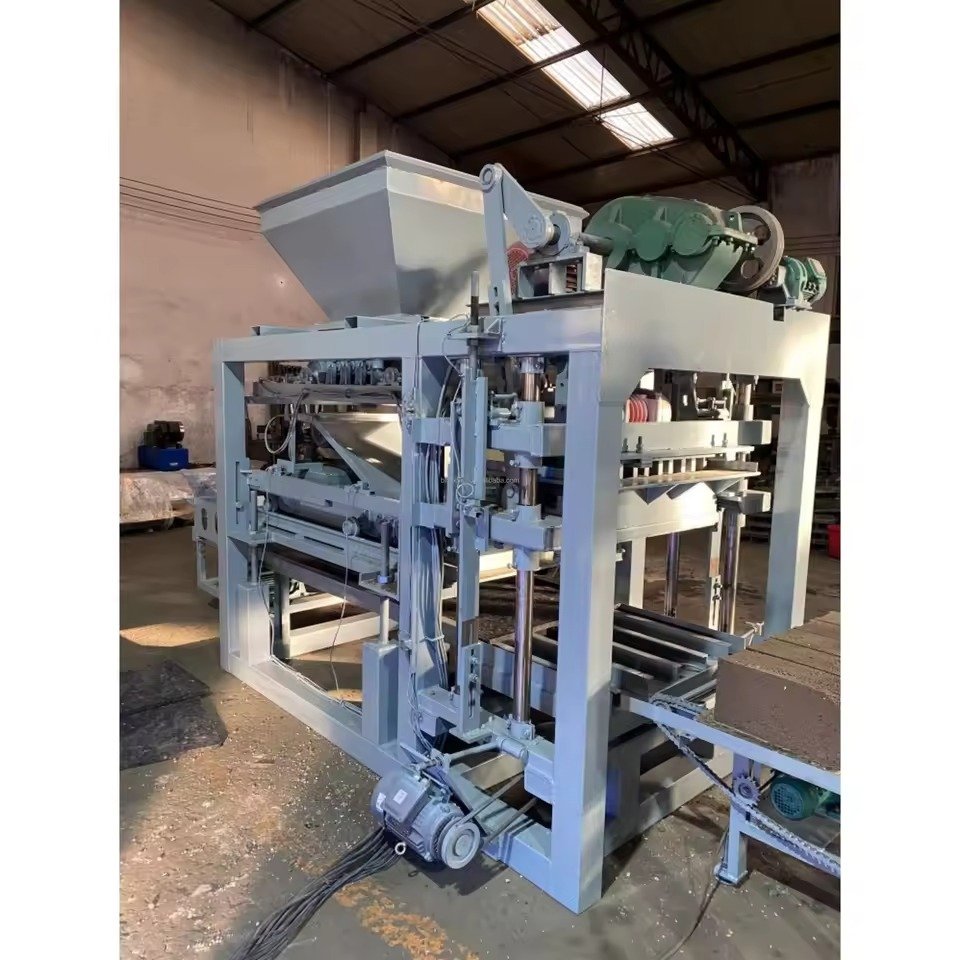
This comprehensive guide explains exactly what machines and processes you need for successful brick manufacturing. Whether you’re launching a new production facility or upgrading existing equipment, you’ll understand the complete equipment lineup, capacity planning, and investment requirements.
MAIKONG specializes in brick making machines and block making machines tailored for the South African market. Our equipment handles everything from small-scale manual operations to fully automatic brick production lines.
Understanding the Brick Manufacturing Machine Production Process
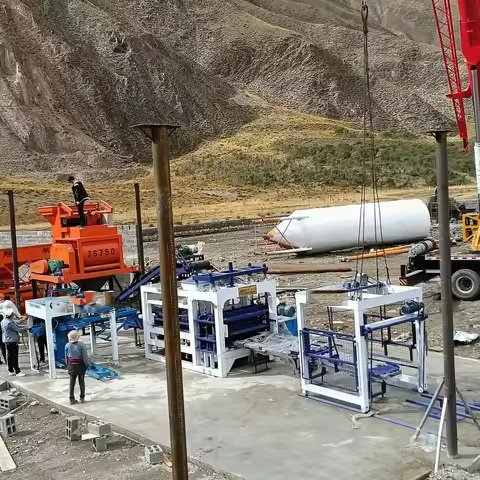
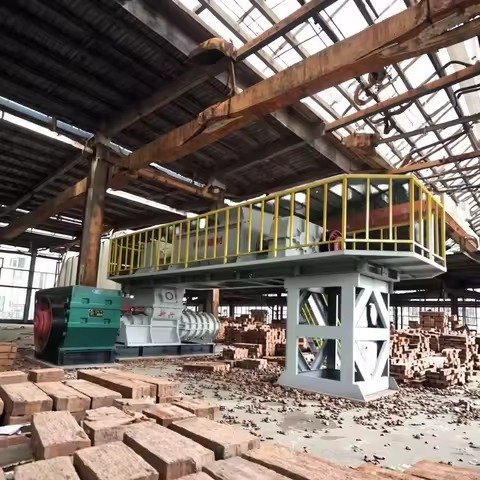
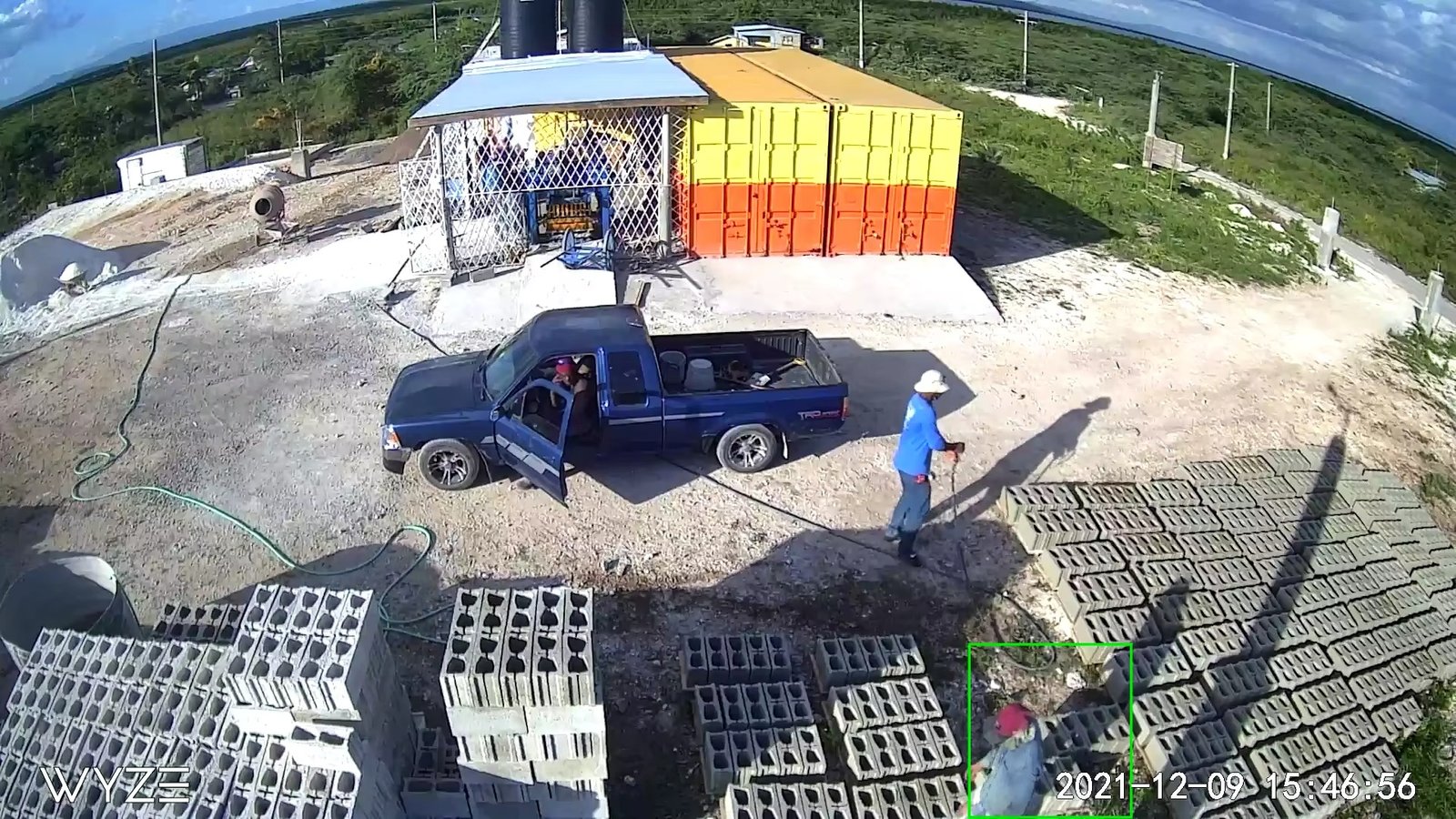
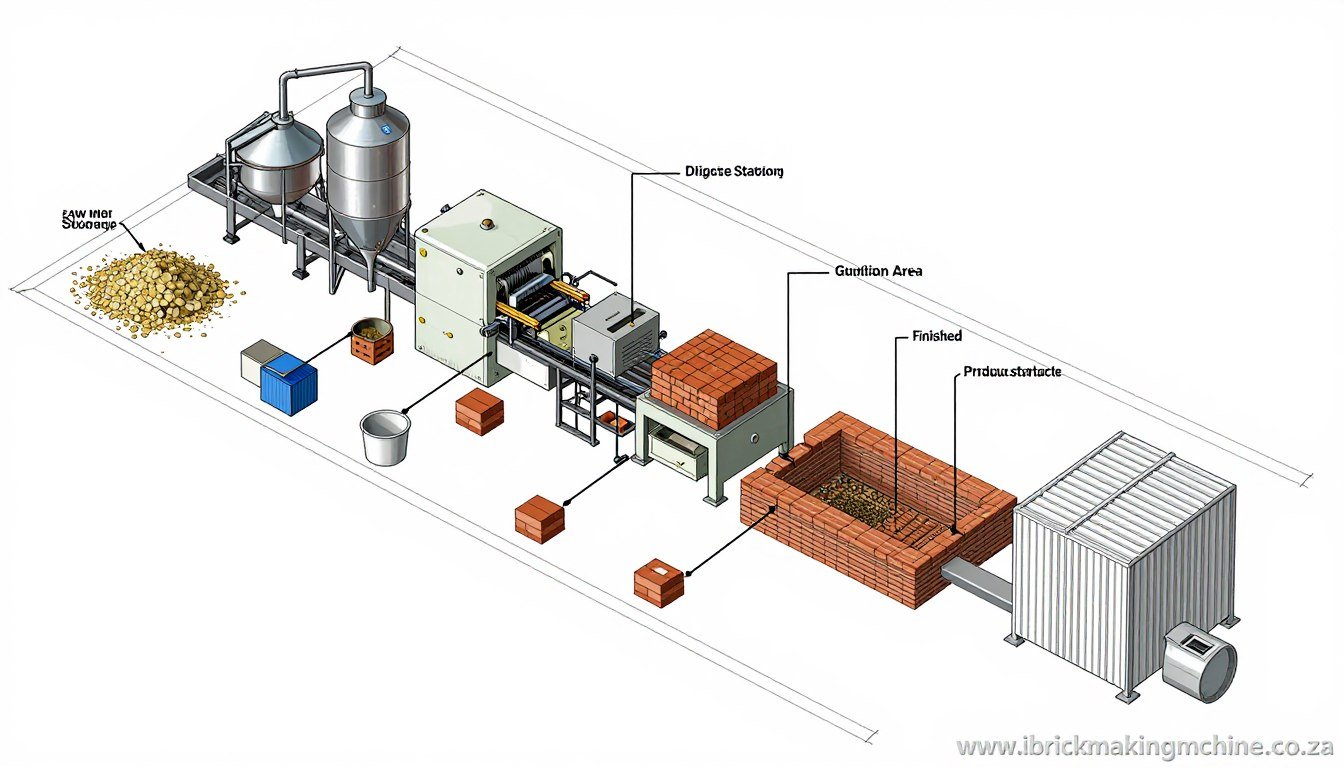
The brick making process involves several coordinated stages. Each stage requires specific equipment working together as an integrated production line. Understanding this workflow helps you select the right machines for your operation.
Core Components of a Complete Production Line
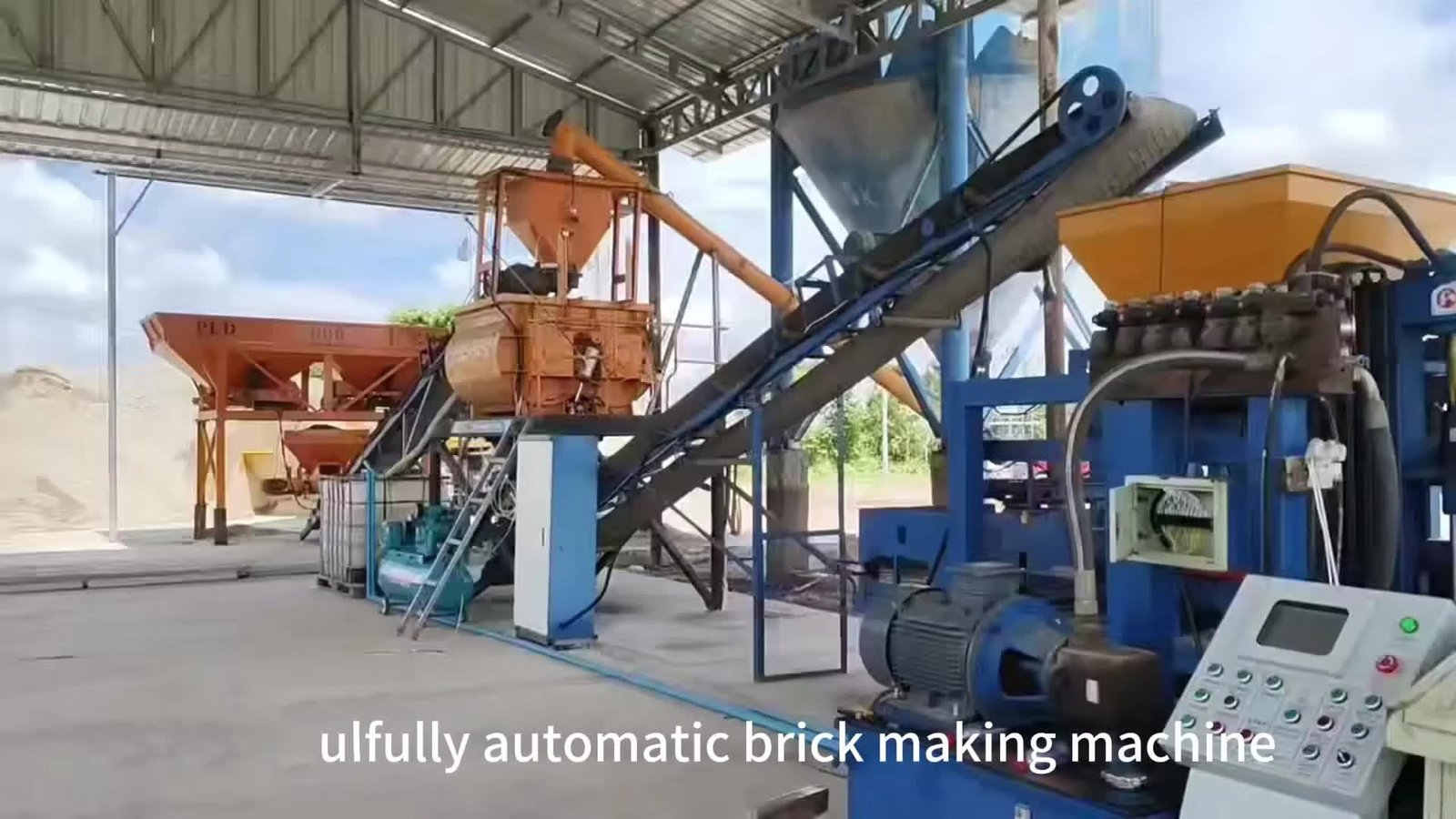
A complete brick manufacturing machine system includes material handling, mixing, molding, curing, and stacking equipment. The centerpiece is the brick machine itself, but supporting equipment determines your overall productivity and product quality.
Primary Equipment Required
- Brick making machine (manual, semi-automatic, or fully automatic)
- Material mixer for cement, sand, and aggregate blending
- Conveyor systems for raw material transport
- Hydraulic pressure system for block formation
- Pallet feeding and circulation system
- Mold sets for different brick sizes and types
Supporting Infrastructure
- Curing area with controlled humidity and temperature
- Forklift or stacker for finished product handling
- Storage area for raw materials (minimum 200 square meters)
- Water supply system (9.6 tons daily for QT8-15 model)
- Electrical infrastructure (380V/415V three-phase power)
- Quality control and testing equipment
Raw Material Processing and Mixing
The production process begins with precise material batching. Your brick making machine performance depends heavily on consistent material preparation. Poor mixing leads to weak blocks and production failures.
For the QT8-15 automatic brick making machine, daily material consumption includes 25.2 tons of cement, 100.8 tons of sand, and 124.8 tons of crushed stones. These proportions create standard strength concrete blocks meeting South African building standards.
Material Quality Impact: Using properly graded aggregates and consistent cement quality improves block strength by 30-40%. MAIKONG machines include sensors that detect material density variations, automatically adjusting pressure for consistent quality.
Types of Brick Making Machines for Different Production Scales
Selecting the right machine type depends on your target production volume, available labor, and capital investment. South Africa entrepreneurs typically choose from three main categories of brick machines.
Manual Brick Making Machines
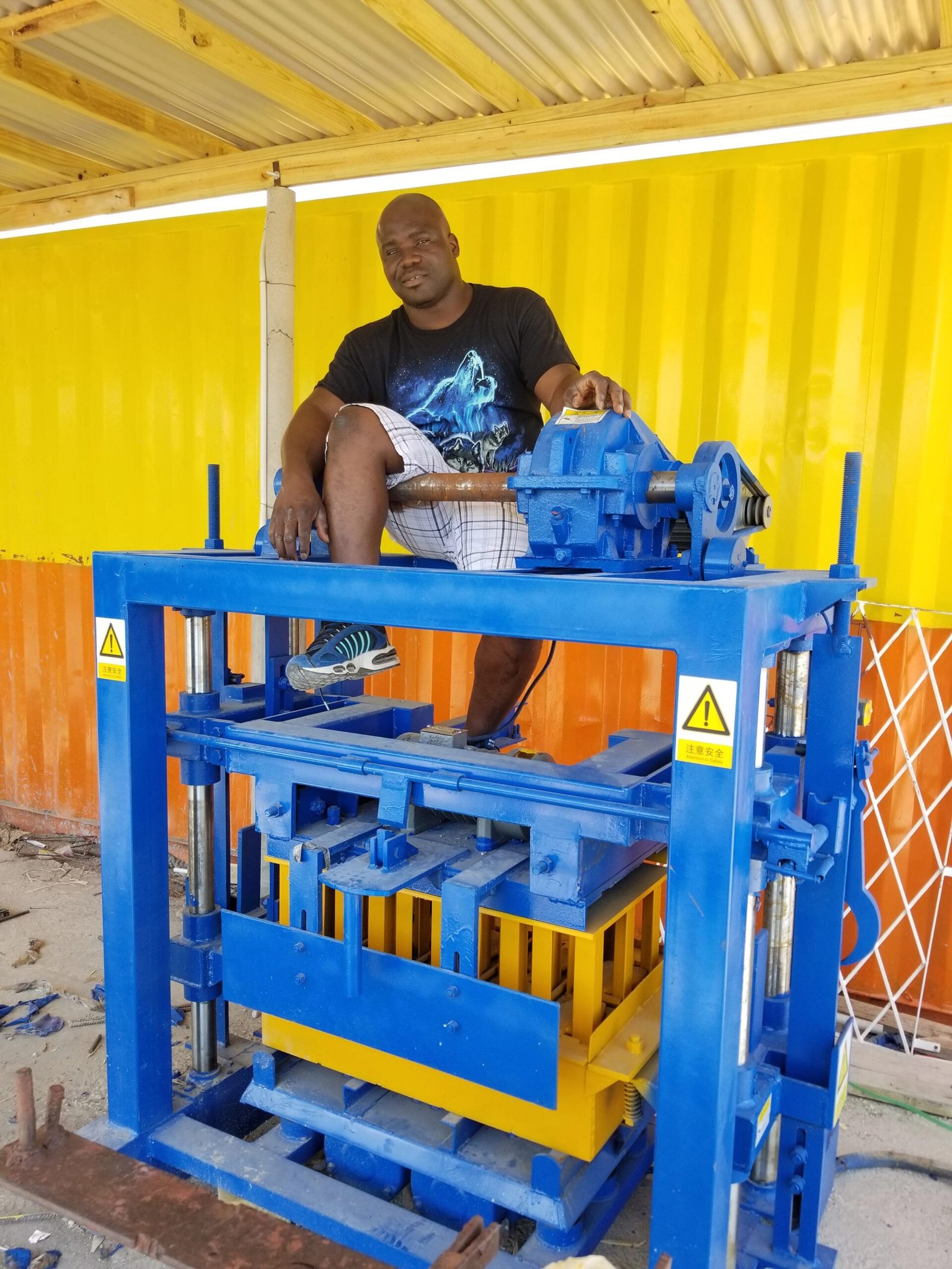
A manual brick making machine suits small-scale operations and startup businesses. These machines require hand-operated levers or simple hydraulic jacks to form blocks. Production capacity reaches 500-800 blocks per day with 2-3 workers.
Manual models cost between 2,500 and 8,000 USD. They’re ideal for rural South African areas with limited electricity access. The lower initial investment lets you test market demand before scaling up.

Semi-Automatic Block Making Equipment
Semi-automatic machines combine manual material feeding with automatic molding and ejection. These systems produce 1,200-2,500 blocks daily. Workers load material into the hopper, but hydraulic systems handle compression and block release automatically.
Investment range for semi-automatic equipment runs from 15,000 to 35,000 USD. This category offers the best balance between cost and productivity for medium-sized brick making operations in South Africa.
Fully Automatic Brick Production Lines
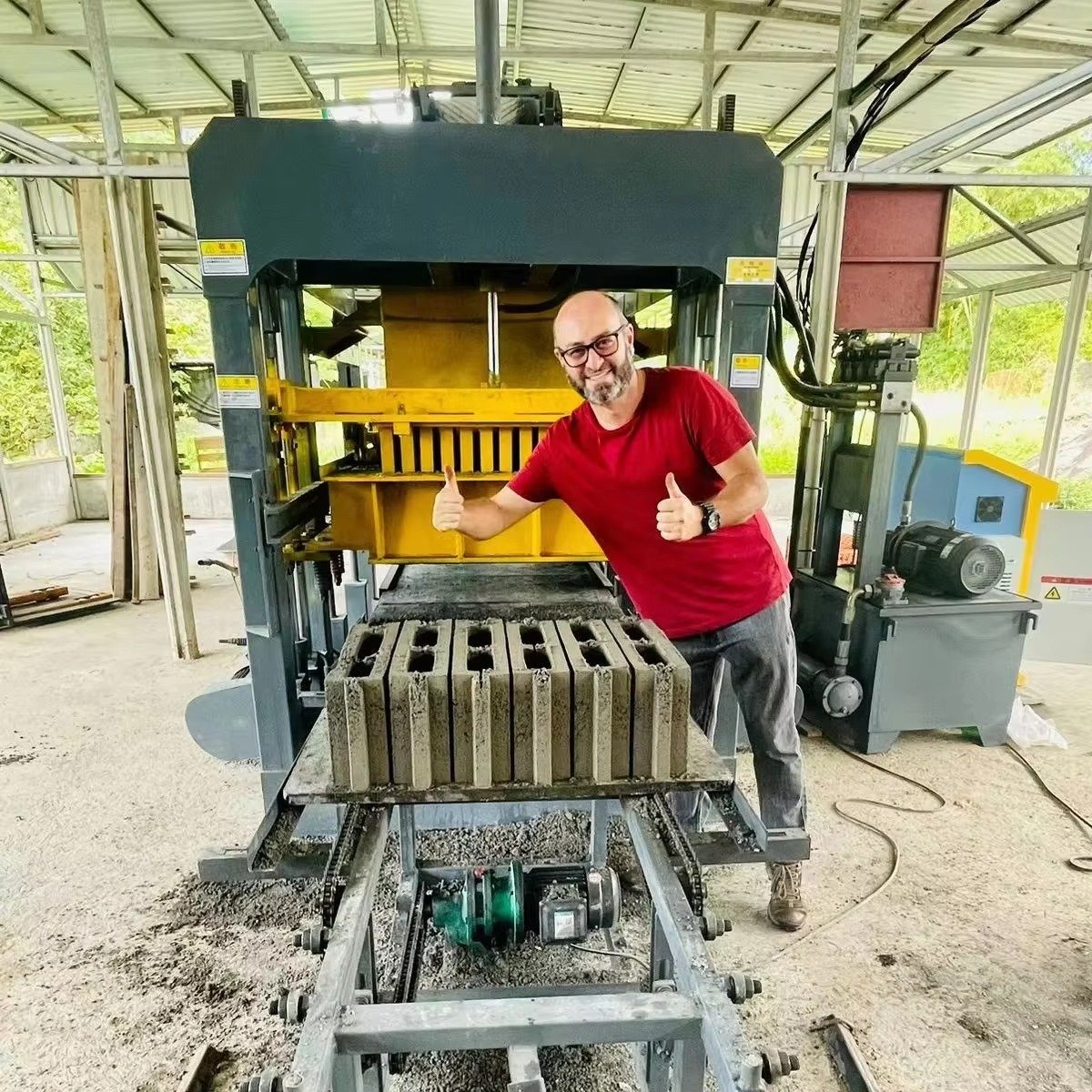
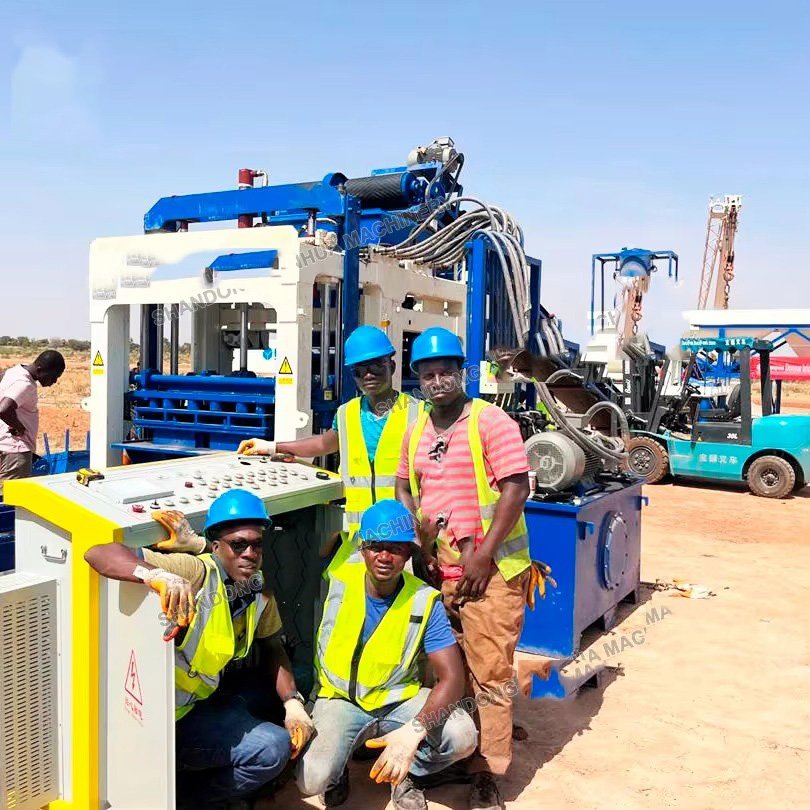
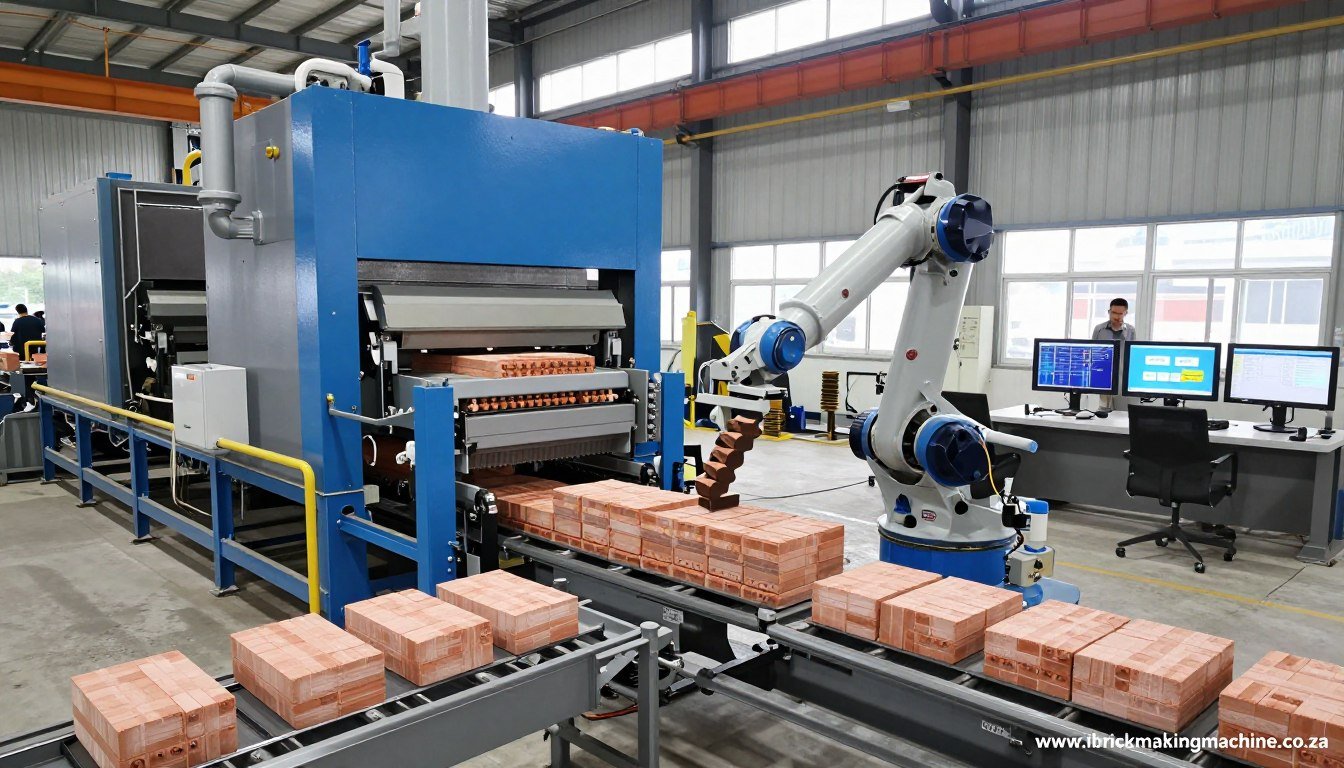
Fully automatic brick production lines like the MAIKONG QT8-15 model represent industrial-scale manufacturing. These systems integrate material batching, mixing, molding, and stacking with minimal human intervention. Production reaches 15,360 hollow blocks per eight-hour shift.
Complete automatic systems require 45,000 to 70,000 USD investment. The higher initial cost delivers faster ROI through dramatically increased output and reduced labor costs. Six workers operate a line that would require 20+ workers with manual equipment.
Not Sure Which Machine Type Fits Your Production Goals?
Our technical team helps you match equipment to your capacity needs, budget, and market requirements. Get personalized recommendations based on your specific production plans in South Africa.
QT8-15 Automatic Brick Making Machine: Technical Specifications and Capabilities
The MAIKONG QT8-15 represents our most popular fully automatic brick making machine for South African markets. This model balances high productivity with reasonable investment requirements.
Production Capacity and Output
The QT8-15 produces 15,360 pieces of standard 8-inch hollow blocks per day during an eight-hour shift. This capacity calculation assumes standard 400x200x200mm blocks. Different mold configurations allow production of various block types including paving stones, curbstones, and interlocking blocks.
| Block Type | Size (mm) | Daily Production (8hrs) | Blocks per Cycle |
| Standard Hollow Block | 400x200x200 | 15,360 pieces | 8 blocks |
| Solid Brick | 240x115x90 | 28,800 pieces | 15 blocks |
| Paving Block | 200x100x60 | 38,400 pieces | 20 blocks |
| Curbstone | 500x250x120 | 9,600 pieces | 5 blocks |
| Interlock Block | 230x220x115 | 19,200 pieces | 10 blocks |
Technical Parameters and Power Requirements
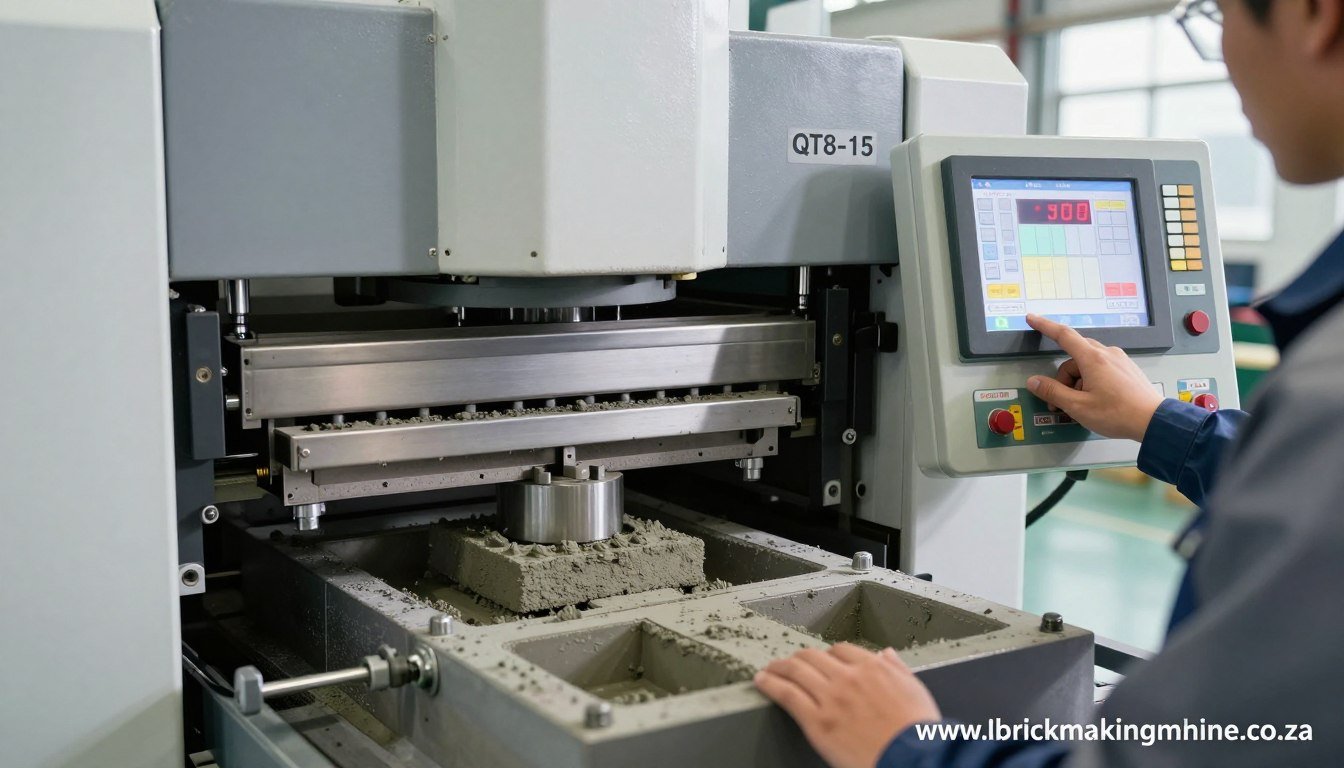
Understanding the technical specifications helps you prepare your facility infrastructure. The QT8-15 requires specific electrical, water, and space provisions for optimal operation.
Electrical Specifications
- Voltage Options: 220V / 380V / 415V three-phase
- Frequency: 50Hz or 60Hz compatible
- Total Power: 50.2kW installed capacity
- Power Consumption: 614.4 kWh per day
- Generator Backup: 100 KVA diesel generator recommended
- PLC Control: Schneider components with touch screen
Physical Dimensions
- Machine Size: 8300 x 1860 x 3000mm (L x W x H)
- Machine Weight: 8,500 kg
- Pallet Size: 950 x 900 x 30mm
- Workshop Area: Minimum 200 square meters
- Total Land: 2,500-6,500 square meters including storage
- Moulding Cycle: 12-20 seconds per cycle
Core Component Quality and Durability
MAIKONG brick manufacturing machine components undergo rigorous quality control. Each major system uses premium materials designed for demanding production environments in South Africa.
Steel Frame Construction
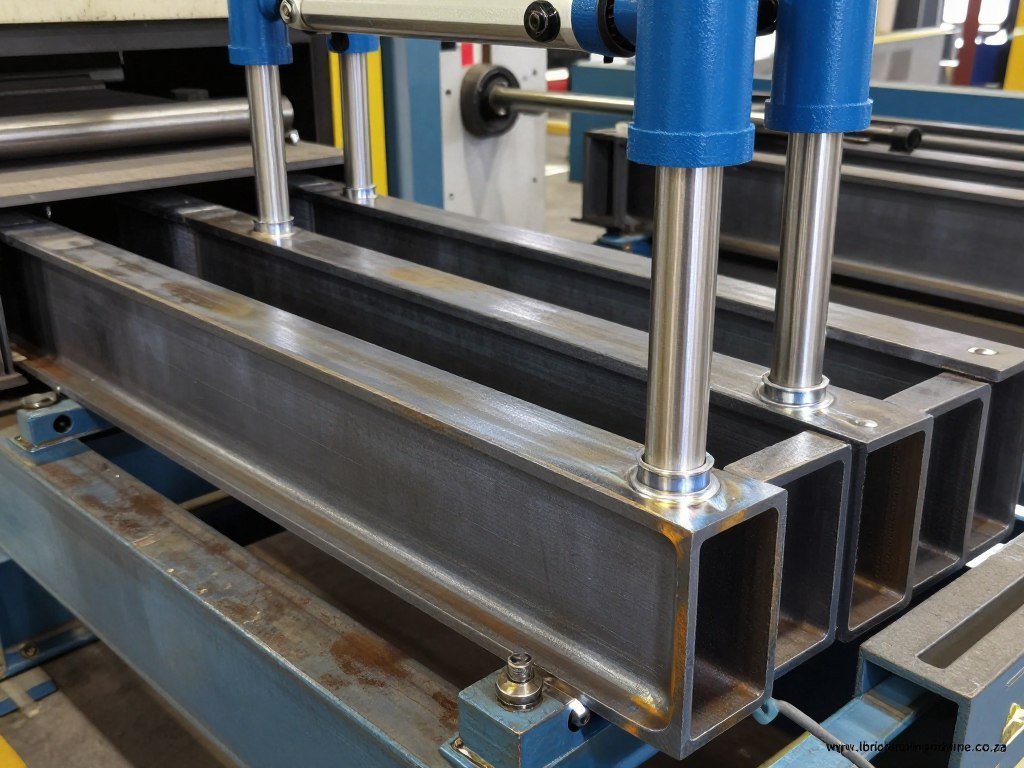
The frame uses high-strength square steel with special welding technology. This construction provides exceptional rigidity and shock resistance during hydraulic compression cycles. Expected frame life exceeds 15 years with proper maintenance.
The four-pillar guide system ensures accurate alignment between the press head and mold box. Guide pillars receive chrome plating for anti-friction performance. This precision prevents mold damage and ensures consistent block dimensions.
Hydraulic and Vibration Systems
The hydraulic station uses electromagnetic proportional valve technology from Taiwan. This system provides 80-100 KN vibration force with 4,600 vibrations per minute. The separate coupling shaft vibrating technology doubles the effective vibrating area compared to conventional designs.
This vibrating system produces denser, stronger blocks while extending mold life. The vibrating box suspends under the mold box, isolating vibration impact from the main frame structure.
PLC Intelligent Control System
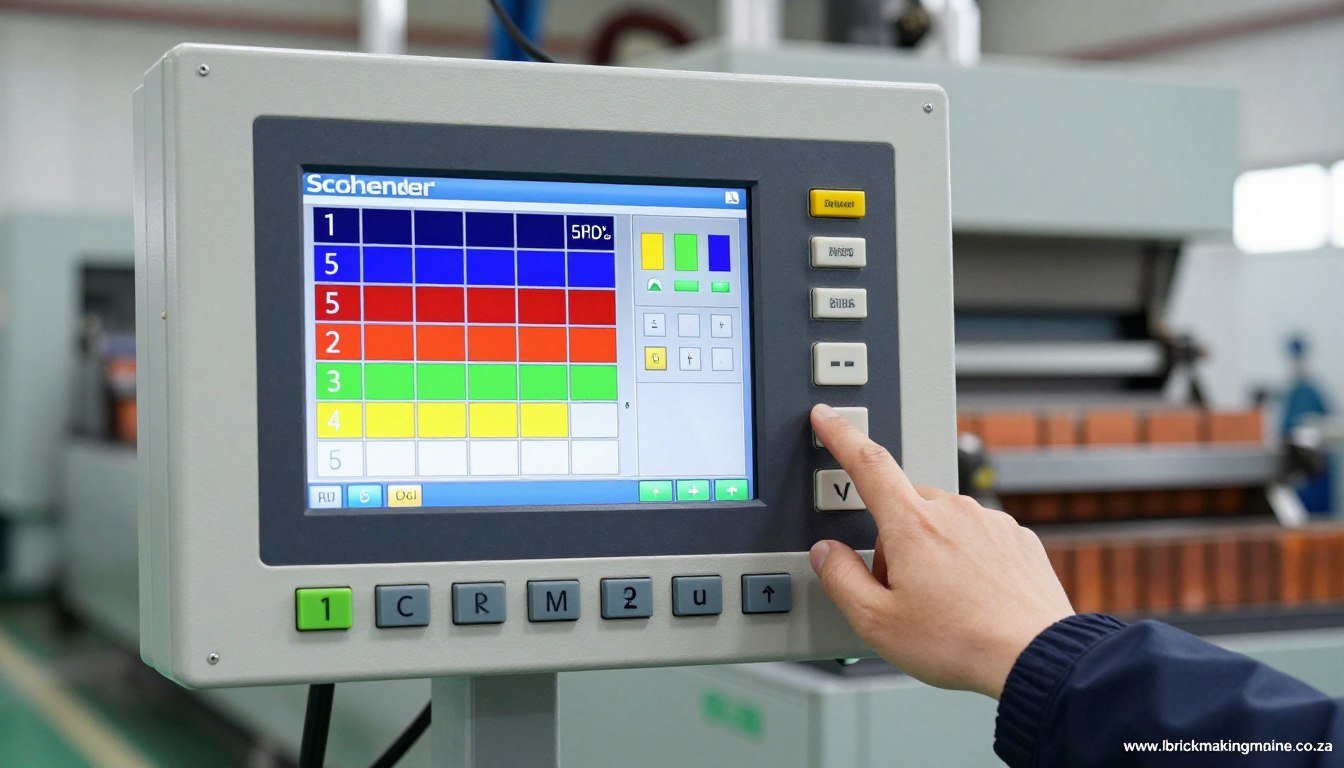
The advanced PLC control panel uses Schneider electronics with China’s top-brand switches. This combination delivers reliable performance with low fault rates. The touch screen interface allows precise adjustment of every machine motion parameter.
Automatic fault diagnosis catches problems early, reducing downtime. Procedure interlocking ensures safe operation sequences, protecting both equipment and operators.
Want Detailed Technical Specifications for Your Project?
Download complete specification sheets including CAD drawings, electrical schematics, and installation requirements. Our engineers provide customized configuration recommendations.
Mold Selection and Brick Type Versatility
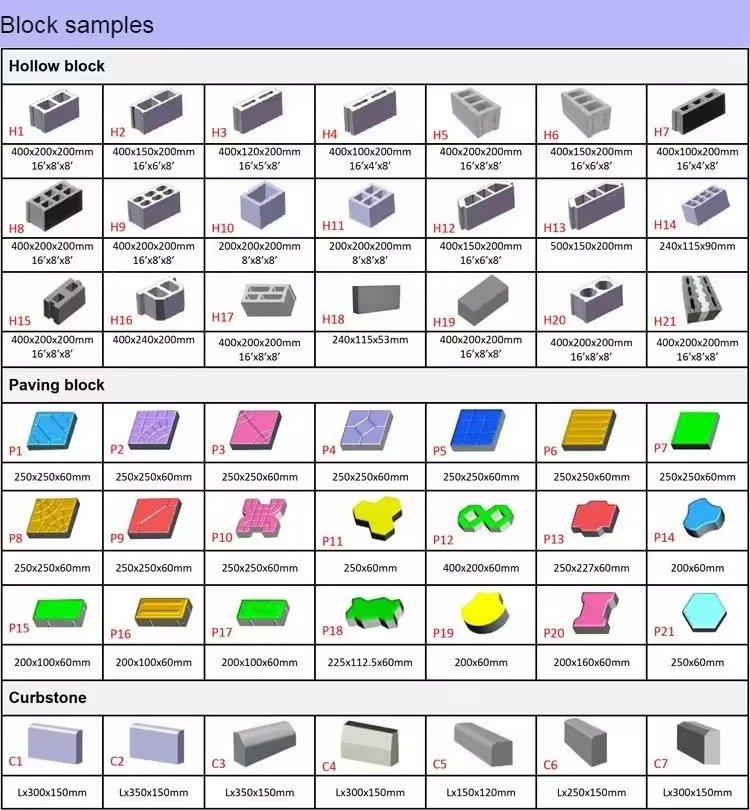
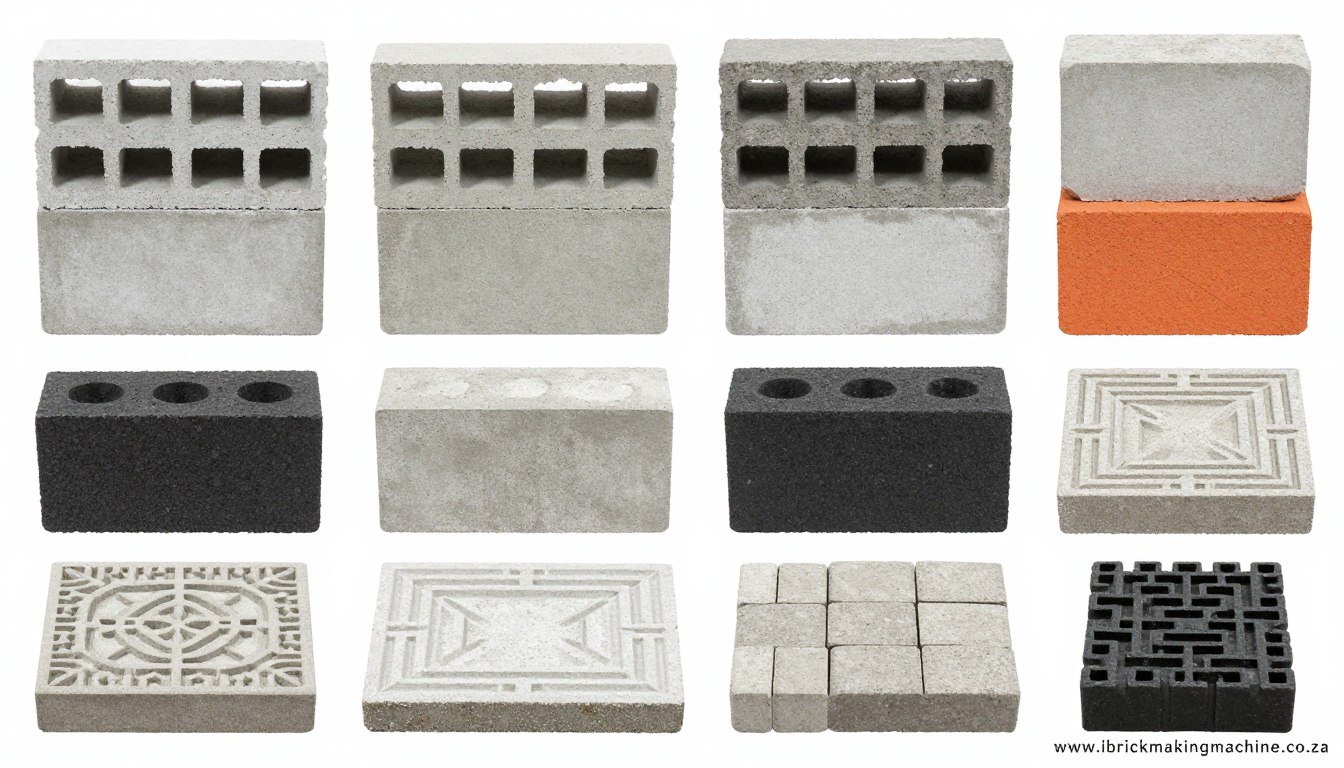
One brick manufacturing machine can produce dozens of different block types through mold changes. MAIKONG machines accept quick-change mold systems, letting you switch products based on market demand.
Available Brick and Block Types
The concrete block making machine configuration accommodates various mold sets. Each mold undergoes 900-degree Celsius heat treatment with carburizing for maximum durability.
Hollow Blocks
- 390 x 190 x 190mm
- 400 x 100 x 200mm
- 400 x 120 x 200mm
- 400 x 150 x 200mm
- 400 x 200 x 200mm
Solid Bricks
- 240 x 115 x 90mm
- 230 x 220 x 115mm
- 200 x 100 x 60mm (standard)
- 300 x 150 x 100mm
- Custom sizes available
Special Blocks
- Paving blocks (interlocking)
- Curbstones (various profiles)
- Hydraform-style blocks
- Colored decorative blocks
- Grass paver blocks
Mold Change Process and Timing
Changing molds on the QT8-15 brick making machine takes approximately 30-45 minutes with two workers. The process requires basic tools and no specialized technical knowledge. This flexibility allows you to adjust production based on daily market orders.
Each mold set costs between 800 and 2,500 USD depending on complexity and size. Standard hollow block molds represent the lower range, while intricate decorative paving molds cost more. Most customers purchase 3-5 mold sets initially to offer variety.
Raw Material Requirements and Quality Standards
Your brick making machine produces quality blocks only when fed appropriate raw materials. Understanding material specifications prevents production problems and ensures consistent output.
Cement Selection for Block Production
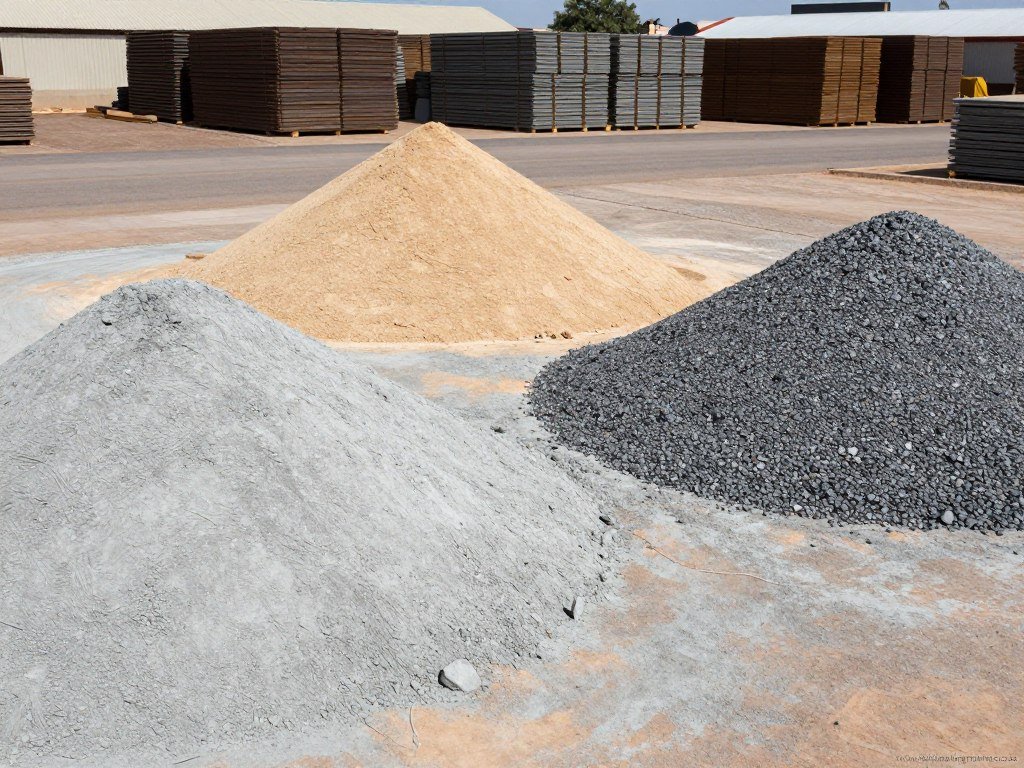
Use Portland cement grade 32.5 or 42.5 for standard strength blocks. The QT8-15 consumes 25.2 tons of cement daily at full capacity. Higher cement content (12-15% by volume) creates stronger blocks but increases costs.
For cement block making machine applications in South Africa, locally produced cement meets requirements. Ensure consistent supply contracts to avoid production interruptions.
Aggregate and Sand Specifications
Crushed stone aggregates should measure 3-10mm diameter. The machine requires 124.8 tons of crushed stone daily. Larger aggregates prevent proper compaction, while fines create weak blocks.
Sand must be clean river sand or manufactured sand with less than 3% silt content. Daily consumption reaches 100.8 tons. Dirty sand with clay or organic matter reduces block strength significantly.
Water Quality and Consumption
Clean water free from oil, acid, or excessive minerals is essential. The production line consumes 9.6 tons of water daily. Contaminated water prevents proper cement hydration and weakens the final product.
Install water storage tanks holding at least two days of supply. This buffer prevents production stops during municipal water interruptions common in some South African areas.
Cost Optimization Tip: Raw material costs represent 60-70% of total production expenses. Negotiating bulk supply contracts for cement and aggregates reduces per-unit costs by 15-25%. MAIKONG helps new customers identify reliable suppliers in their region.
Pricing Range and Investment Analysis for South Africa
Understanding total investment requirements prevents budget surprises. The brick making machine purchase represents just one component of startup costs.
Equipment Pricing Breakdown
The QT8-15 fully automatic brick manufacturing machine costs between 45,000 and 70,000 USD depending on configuration. Price variations reflect optional features like automatic stackers, color feeding systems, and extended mold sets.
| Equipment Category | Basic Configuration | Advanced Configuration | Premium Configuration |
| Brick Making Machine | $45,000 | $55,000 | $70,000 |
| Mixer System | $8,000 | $12,000 | $18,000 |
| Material Batching | $6,000 | $9,000 | $15,000 |
| Automatic Stacker | Not included | $12,000 | $18,000 |
| Mold Sets (3-5 types) | $3,500 | $6,000 | $10,000 |
| Total Equipment | $62,500 | $94,000 | $131,000 |

Additional Startup Costs
Beyond equipment purchase, budget for facility preparation, initial material inventory, and working capital. Total startup investment for a QT8-15 operation typically ranges from 80,000 to 180,000 USD.
- Land and Building: 2,500-6,500 square meters required (purchase or lease)
- Site Preparation: Concrete foundation, electrical installation, water systems
- Initial Material Stock: Two weeks of cement, sand, and aggregate supply
- Transportation: Forklift or front-loader for material handling
- Working Capital: 2-3 months operating expenses including labor and utilities
- Shipping to South Africa: Equipment freight and customs clearance
Return on Investment Timeline
Most South African operators achieve positive cash flow within 8-14 months. ROI depends on local block prices, raw material costs, and production efficiency.
Standard hollow blocks (400x200x200mm) sell for 4-7 ZAR each in South African markets. With daily production of 15,360 blocks and 4.50 ZAR selling price, gross daily revenue reaches approximately 69,000 ZAR. After raw material costs (approximately 35,000 ZAR daily), operating profit provides healthy margins.
Get Customized Pricing and ROI Analysis
Receive detailed quotation including equipment, shipping to your South Africa location, and projected ROI based on your local market conditions. Our team provides complete financial planning support.
Installation, Training, and After-Sales Support
MAIKONG provides comprehensive support throughout equipment setup and ongoing operation. Our commitment extends beyond equipment delivery to ensure your production success.
Installation and Commissioning Process
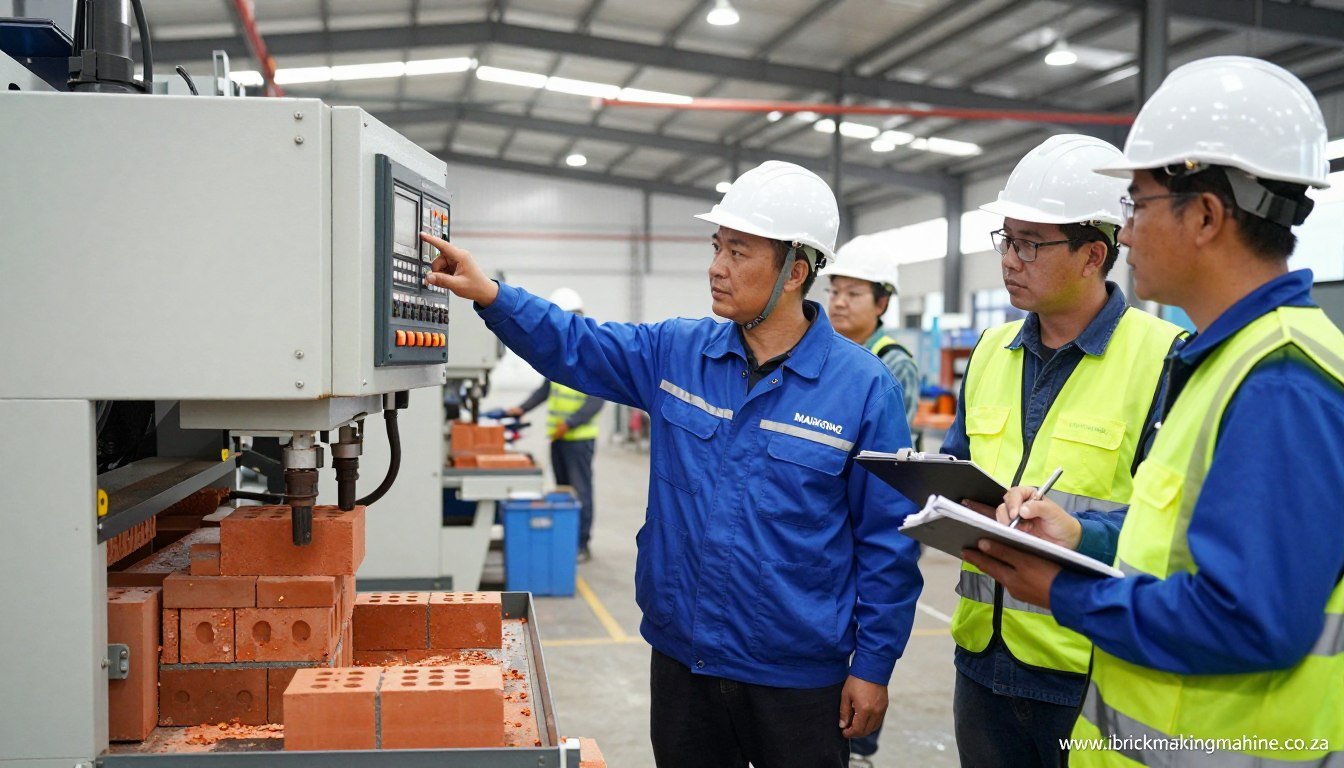
Installation typically requires 5-7 days with our technical team. We handle equipment assembly, electrical connections, hydraulic system testing, and trial production runs. Your team learns operation procedures during this commissioning period.
Before our technicians arrive, prepare the foundation (concrete pad 8.5m x 3m x 0.3m thick), electrical 380V three-phase power connection, and water supply piping. We provide detailed preparation drawings after order confirmation.
Operator Training Program
Your operators receive hands-on training covering machine operation, routine maintenance, troubleshooting, and safety procedures. Training documentation comes in English, standard for South African industrial operations.
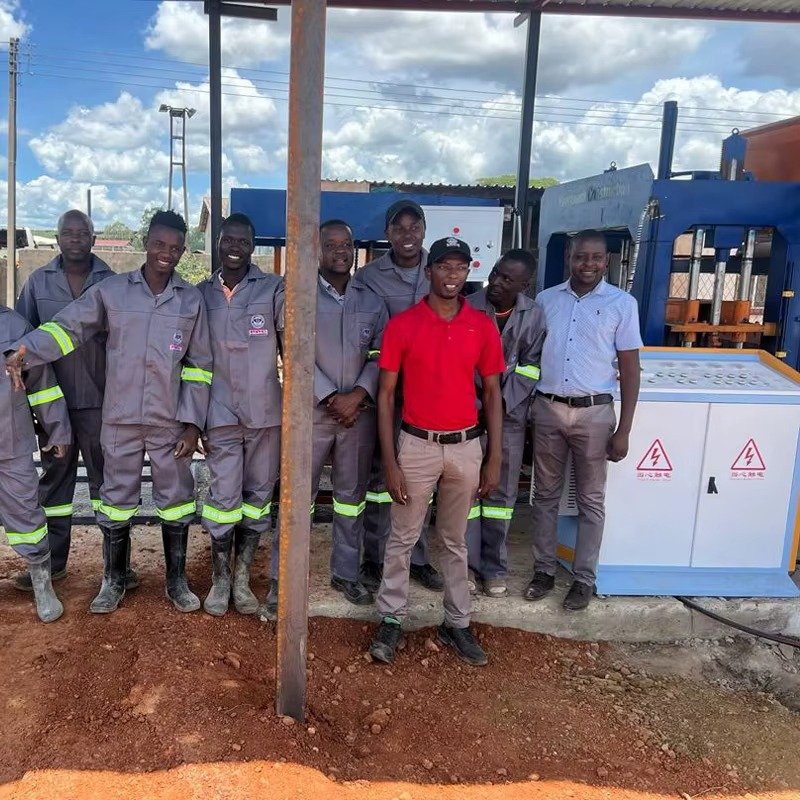
We train 6-8 people during installation: machine operators, maintenance technicians, and supervisors. This knowledge transfer ensures your team handles daily operations independently.
Warranty and Technical Support
MAIKONG provides a 1-year comprehensive warranty covering all core components. This warranty includes free replacement parts for manufacturing defects. Extended warranty options are available for additional peace of mind.
Technical support continues throughout your equipment’s lifetime. Contact our team via WhatsApp at +86 158-1555-6422 for immediate assistance. Response time averages 2-4 hours for technical questions. For complex issues, we arrange video calls to diagnose problems remotely.
Local Support Network: MAIKONG partners with distributors across South Africa who stock common spare parts. This network reduces downtime by ensuring fast access to replacement components when needed.
Spare Parts and Consumables
Regular maintenance requires periodic replacement of wear components. We recommend stocking essential spare parts including hydraulic seals, vibration motor bearings, and PLC sensors.
A complete spare parts kit for one year of operation costs approximately 3,500-5,000 USD. This investment prevents production interruptions. Order spare parts directly through our contact channels with delivery to South Africa within 7-10 days.
Production Optimization and Quality Control
Maximizing your brick manufacturing machine output requires attention to operational details. Small adjustments in material preparation, machine settings, and workflow organization significantly impact productivity.
Daily Production Workflow
Establish a consistent daily routine to maintain steady output. The QT8-15 achieves its rated capacity of 15,360 blocks when following proper operating procedures.
Morning Shift (6:00 AM – 2:00 PM)
- Pre-operation inspection (30 minutes)
- Material preparation and mixer startup
- Production run (7 hours)
- First batch curing monitoring
- Mid-shift maintenance checks
Afternoon Shift (2:00 PM – 10:00 PM)
- Shift handover and production continuity
- Second production run (7 hours)
- Quality testing samples
- Equipment cleaning and lubrication
- Next-day material preparation
Quality Control Checkpoints
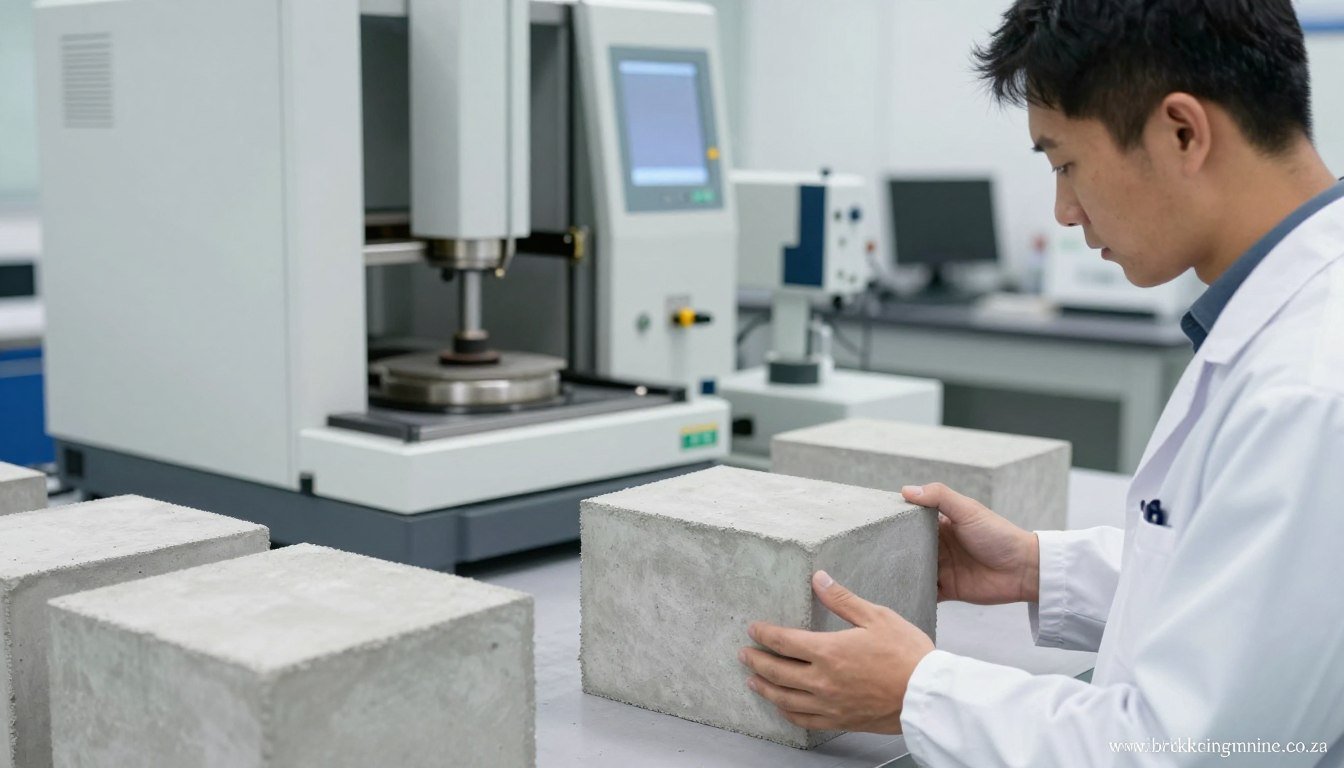
Implement regular testing to ensure consistent block quality. Poor-quality blocks damage your reputation and reduce profitability.
- Material Testing: Check aggregate grading and cement quality weekly
- Mix Consistency: Verify moisture content before molding (6-8% optimal)
- Dimension Accuracy: Measure random samples hourly (±2mm tolerance)
- Compression Strength: Test cured blocks weekly (meet SANS 1215 standards)
- Surface Quality: Inspect for cracks, voids, or surface defects
- Curing Conditions: Maintain 70-80% humidity during 7-day cure cycle
Common Production Issues and Solutions
Understanding typical problems helps you maintain continuous production. Most issues have straightforward solutions requiring minor adjustments.
| Problem | Likely Cause | Solution |
| Blocks cracking after molding | Too much water in mix | Reduce water content by 5-10% |
| Weak, crumbly blocks | Insufficient cement or poor compaction | Increase vibration time or cement ratio |
| Uneven block dimensions | Worn mold or poor material distribution | Inspect mold condition, adjust distributor |
| Surface roughness or voids | Aggregate too large or inadequate vibration | Use smaller aggregate, extend vibration cycle |
| Machine stops during cycle | Electrical issue or sensor misalignment | Check PLC error codes, verify sensor positions |
South African Market Considerations and Opportunities
The South African construction industry presents significant opportunities for brick making businesses. Understanding local market dynamics helps position your production for success.
Construction Industry Demand
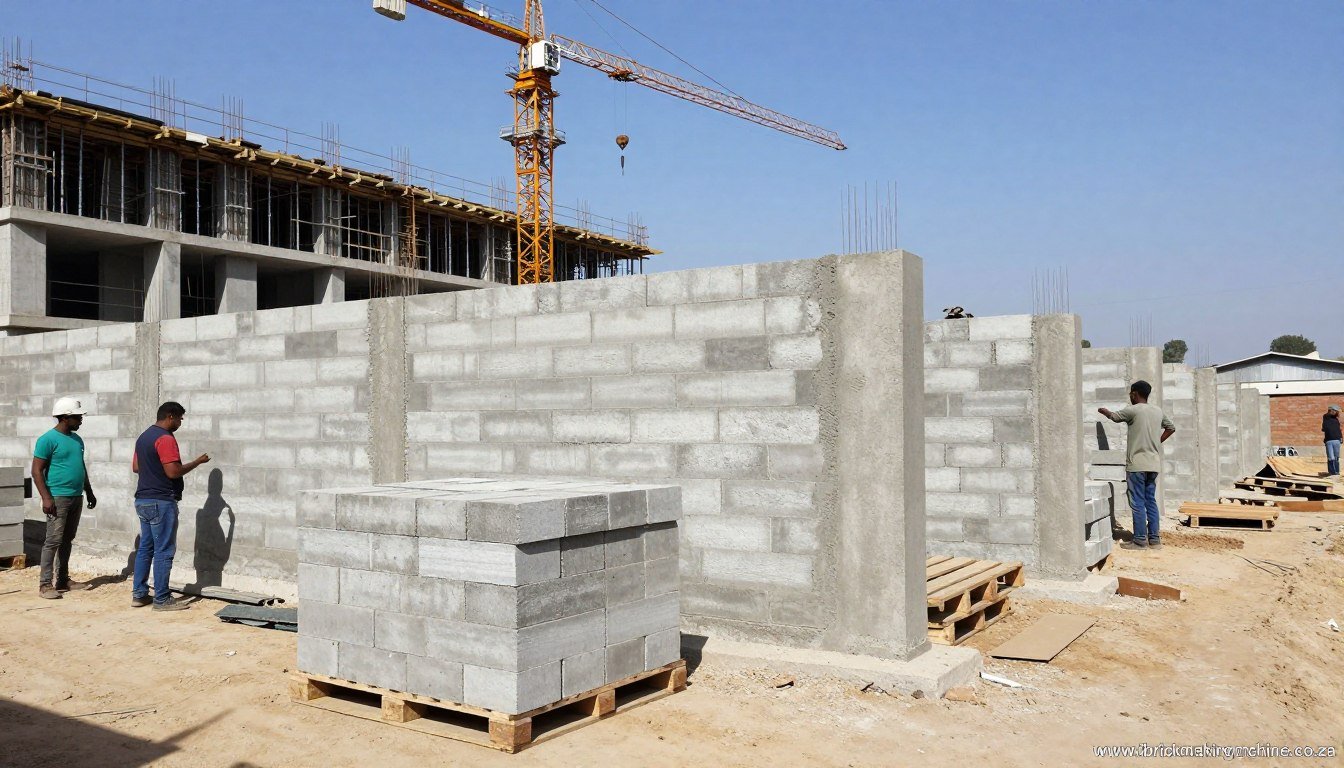
South Africa faces ongoing housing demand, particularly in affordable housing segments. Government programs and private development projects create steady block requirements. This consistent demand supports new brick manufacturing machine investments.
Regional variations exist across provinces. Gauteng, Western Cape, and KwaZulu-Natal show strongest construction activity. Research your specific area to understand local demand before investing in production capacity.
Competitive Positioning Strategies
Successful brick making operations differentiate through product variety, consistent quality, and reliable delivery. Your block making machine versatility allows you to serve multiple market segments simultaneously.
- Offer diverse products: standard blocks, decorative pavers, custom colors
- Maintain strict quality standards exceeding SANS specifications
- Provide flexible delivery schedules for project-based customers
- Develop relationships with builders, contractors, and hardware retailers
- Consider value-added services like delivery and technical advice
Regulatory Compliance Requirements
South African concrete blocks must meet SANS 1215 standards for structural applications. Your brick manufacturing machine easily produces compliant products when using proper material ratios and curing procedures.
Register your business appropriately, obtain environmental clearances for dust and noise, and ensure worker safety compliance. MAIKONG machines incorporate safety features meeting international standards, simplifying your compliance efforts.
Scaling Production and Expansion Options
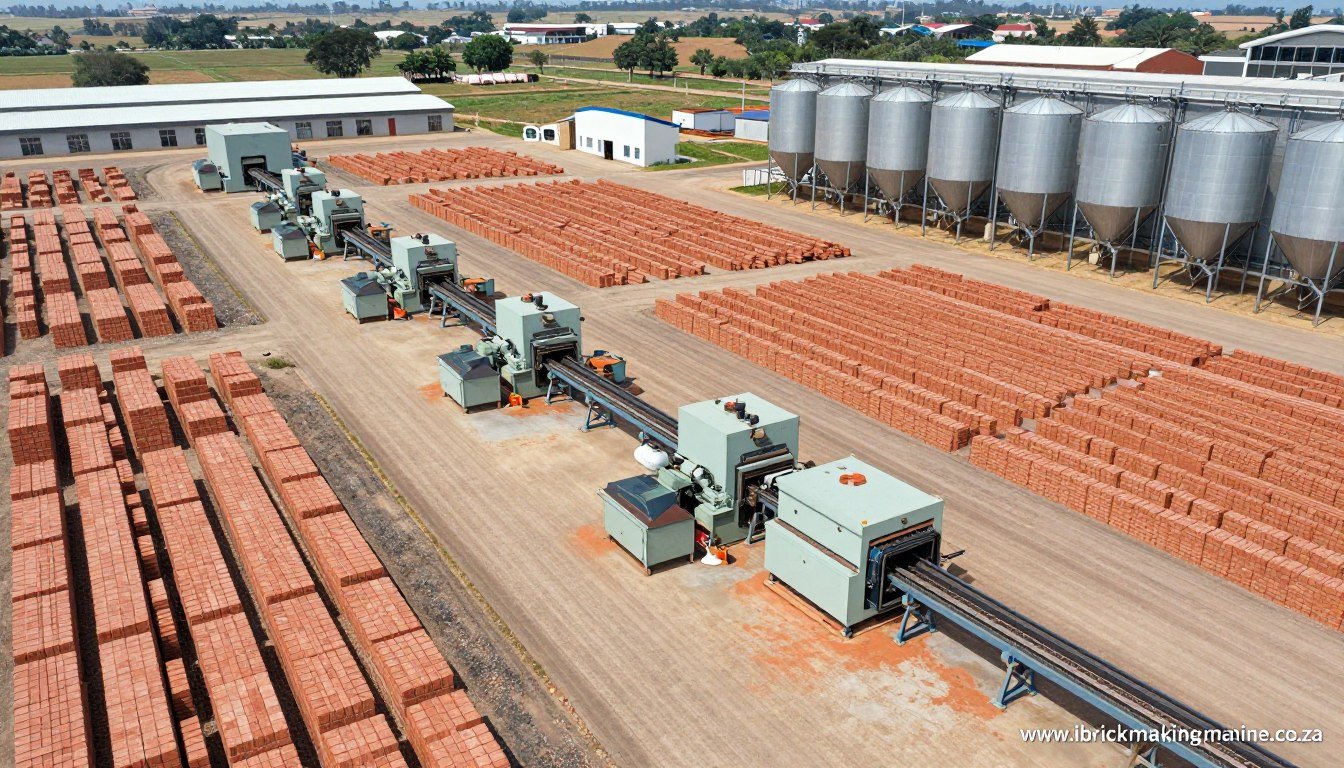
Many customers start with one brick making machine and expand as their market grows. MAIKONG equipment supports phased growth strategies.
Adding Capacity Through Additional Machines
Installing a second machine doubles your production capacity while spreading operational risk. If one unit requires maintenance, production continues on the second line. This redundancy appeals to larger operations supplying major projects.
Space your expansion carefully. Ensure material supply chains, curing area, and handling equipment can support increased output before adding machines.
Upgrading to Higher Automation Levels
Retrofit options let you automate manual processes gradually. Add automatic stackers, robotic pallet handlers, or advanced material batching systems to existing setups. These incremental improvements boost productivity without replacing your core brick manufacturing machine.
Vertical Integration Opportunities
Consider controlling more of your supply chain as you grow. Options include:
- Operating your own aggregate crushing operation
- Establishing concrete ready-mix business alongside block production
- Developing retail outlets for direct customer sales
- Offering brick laying machine services to construction clients
- Manufacturing complementary building materials
Planning Business Growth? Consult with Expansion Specialists
Our business development team helps existing operators scale efficiently. Get guidance on equipment selection, layout optimization, and capacity planning for multi-line operations.
Frequently Asked Questions About Brick Manufacturing Machines
What is the minimum space required for a brick making machine operation?
A complete QT8-15 operation requires 2,500-6,500 square meters total land area. This includes the main workshop (minimum 200 square meters), raw material storage (approximately 1,000 square meters), curing area (1,500-2,000 square meters), and finished product storage (800-1,000 square meters). Smaller manual operations can function in 500-1,000 square meters total.
How many workers are needed to operate an automatic brick making machine?
The QT8-15 fully automatic line operates with 6 workers per shift: one machine operator, two material handlers, one mixer operator, one forklift driver, and one supervisor. Manual machines require 2-3 workers. Semi-automatic systems need 4-5 people. Labor requirements scale with production capacity and automation level.
Can one machine produce different block sizes and types?
Yes, absolutely. The brick manufacturing machine accepts interchangeable molds for various block types including hollow blocks, solid bricks, paving stones, curbstones, and interlocking blocks. Mold changes take 30-45 minutes. Most operators own 3-5 different mold sets to offer product variety and respond to changing market demand.
What is the typical lifespan of a brick making machine?
MAIKONG brick manufacturing machines have operational lifespans exceeding 15-20 years with proper maintenance. The steel frame lasts 15+ years, hydraulic components require replacement every 5-7 years, and molds last 3-5 years depending on usage intensity. Regular maintenance and using genuine spare parts maximize equipment longevity.
How long does shipping to South Africa take?
Sea freight from China to South African ports (Durban, Cape Town) takes 25-35 days. Add 3-5 days for inland transportation and customs clearance. Total delivery time from order confirmation to equipment arrival at your facility averages 35-45 days. Air freight options reduce this to 7-10 days but cost significantly more.
What training is provided with machine purchase?
MAIKONG includes comprehensive training during installation. Our technicians spend 5-7 days at your facility conducting hands-on training covering operation, maintenance, troubleshooting, and safety procedures. Training materials come in English. We train 6-8 of your personnel to ensure knowledge transfer. Additional training visits can be arranged if needed.
Can I produce colored or decorative blocks?
Yes, colored blocks require adding pigment to the mix or using a dual-layer system. Our machines accommodate optional color feeding attachments for face-layer coloring. This produces decorative paving blocks and architectural products commanding premium prices. The color system adds approximately 8,000-12,000 USD to equipment cost.
What power source options exist for areas with unreliable electricity?
The QT8-15 requires 50.2kW power. In areas with unstable electricity supply, we recommend a 100 KVA diesel generator as backup. The generator ensures continuous production during power interruptions. Some customers in remote areas run entirely on generator power. Fuel consumption averages 15-20 liters per hour of operation.
Are financing options available for equipment purchase?
MAIKONG offers flexible payment terms for qualified buyers. Standard terms include 30% deposit with order, 60% before shipping, and 10% after successful commissioning. We also work with leasing companies and can connect you with equipment financing partners in South Africa. Contact our sales team to discuss options matching your financial situation.
How do I get spare parts after warranty expires?
MAIKONG maintains spare parts inventory for all machine models indefinitely. Order parts through our contact channels (WhatsApp, email, phone). We ship common components within 48 hours. Our South African distributor network stocks frequently needed items for faster local delivery. Parts documentation includes diagrams and part numbers for easy ordering.
OEM and Custom Configuration Options
MAIKONG offers customization services for specialized production requirements. Our engineering team modifies standard machines to meet unique application needs.
Available Customization Options
Standard brick manufacturing machine configurations suit most applications. However, specific projects sometimes require modifications.
- Voltage and Frequency: Adapt electrical systems for local power standards (220V, 380V, 415V; 50Hz or 60Hz)
- Custom Mold Designs: Engineer proprietary block designs for unique architectural applications
- Increased Capacity: Modify vibration and hydraulic systems for higher output
- Special Material Handling: Adapt for lightweight aggregates, recycled materials, or alternative binders
- Climate Adaptations: Enhance weather protection for extreme temperature or humidity environments
- Integration Requirements: Modify interfaces to work with existing factory automation systems
Private Label and OEM Manufacturing
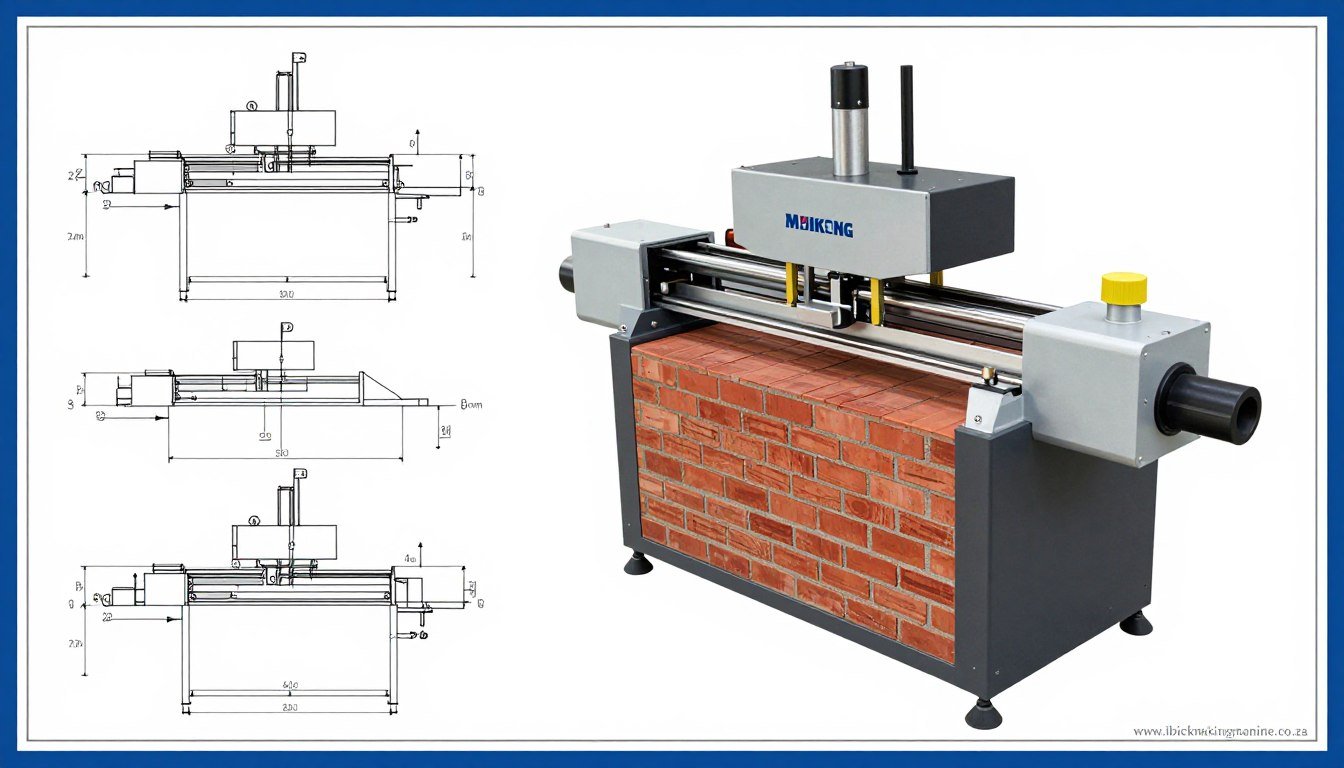
Distributors and large buyers can access our OEM services. We manufacture brick making machines under your brand name with customized colors, logos, and specifications. Minimum order quantities apply for OEM arrangements.
This option suits established construction equipment distributors expanding their product lines or large construction companies wanting branded equipment fleets.
Environmental Considerations and Sustainable Production
Modern brick manufacturing machine operations can minimize environmental impact through careful planning and operational practices.
Resource Efficiency Measures
The concrete block production process consumes significant water and energy. Implementing efficiency measures reduces costs while benefiting the environment.
Water Conservation
Install water recirculation systems to reuse curing water. Simple collection and filtration setups reduce fresh water requirements by 40-60%. This matters increasingly in South Africa where water scarcity affects many regions.
Covered curing areas reduce evaporation, maintaining humidity with less water consumption. Misting systems use 30% less water than traditional flooding methods while providing better moisture control.
Energy Optimization
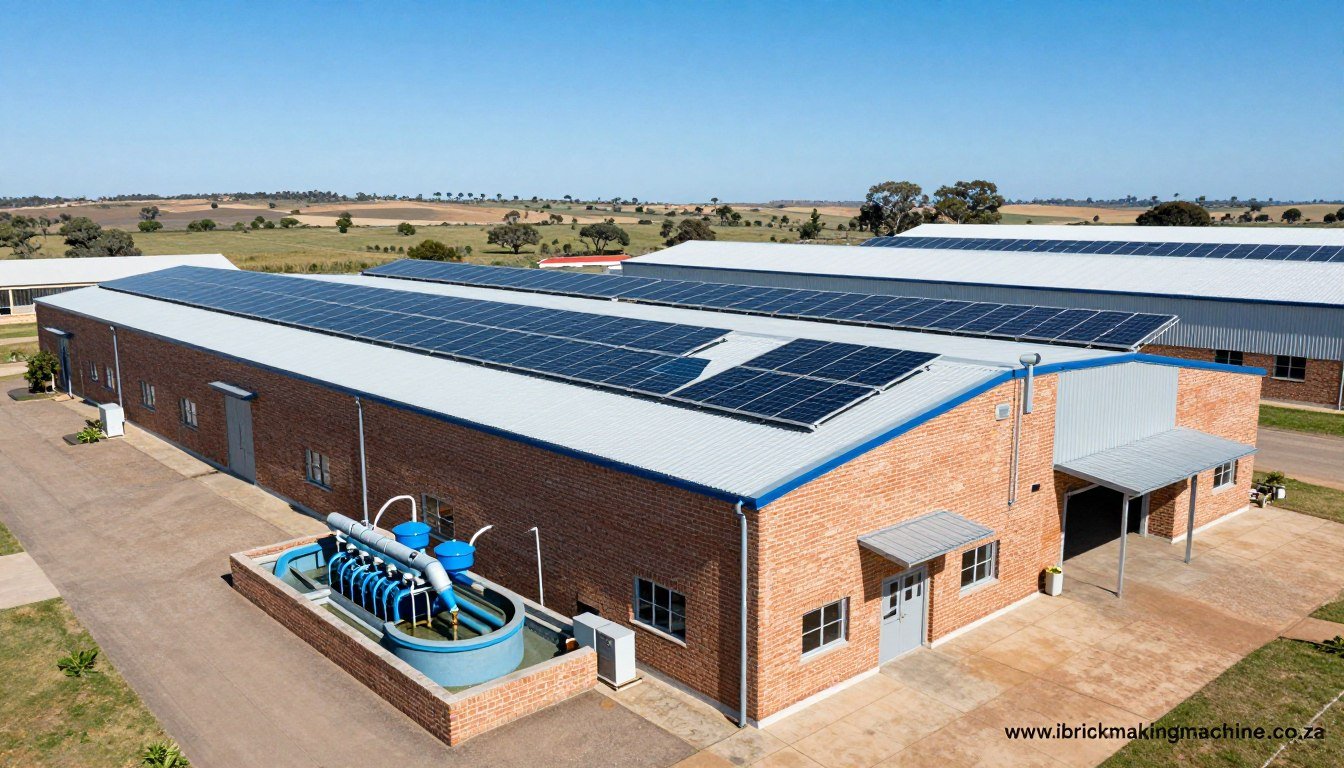
Solar panels offset grid electricity consumption. A 30-40kW solar installation powers significant portions of daily operations. With South Africa’s excellent sun exposure, solar payback periods run 3-5 years.
LED lighting in production areas reduces electrical load by 60-70% compared to traditional fixtures. Variable frequency drives on mixer motors cut energy consumption during partial-load operation.
Alternative and Recycled Materials
Your brick manufacturing machine can process various alternative materials, creating eco-friendly products while reducing waste.
- Fly Ash: Replace 20-30% of cement with fly ash (coal power plant byproduct)
- Crushed Concrete: Use demolished concrete as aggregate (up to 50% replacement)
- Glass Cullet: Incorporate crushed recycled glass as fine aggregate
- Slag: Utilize blast furnace slag as cement supplement
- Brick Waste: Crush defective blocks for use as aggregate in new production
These alternatives often cost less than virgin materials while creating marketable “green building” products. Advertise your environmental credentials to attract eco-conscious builders and projects requiring green certification.
Starting Your Brick Manufacturing Machine Business Journey
Entering the brick making industry requires careful planning and the right equipment partnership. This guide covered the essential aspects of brick manufacturing machine selection, operation, and business development.
Success in South Africa’s construction materials market comes from understanding production processes, maintaining quality standards, and building strong customer relationships. Your equipment choice significantly impacts these factors.
Key Takeaways for Prospective Buyers
- Match machine capacity to realistic market demand (avoid over or under-investment)
- Budget for complete systems, not just the core brick making machine
- Prioritize equipment quality and manufacturer support over lowest initial price
- Plan infrastructure requirements (space, power, water) before equipment arrives
- Establish material supply chains and verify quality before production starts
- Invest in operator training and maintain detailed maintenance schedules
- Start with versatile mold options to serve multiple market segments
- Build relationships with technical support team for ongoing guidance
Next Steps: Moving from Research to Action
You’ve gained comprehensive understanding of brick manufacturing machine requirements and operations. The next step involves detailed planning specific to your situation.
MAIKONG’s technical team assists with site assessments, capacity planning, equipment configuration, and financial projections. We’ve helped hundreds of South African entrepreneurs successfully launch brick making operations.
Whether you’re starting a small brick making machine operation or planning an industrial-scale automatic brick production line, we provide the equipment and expertise supporting your success.
Ready to Start Your Brick Manufacturing Machine Project?
Connect with MAIKONG’s South Africa technical specialists today. We’ll answer your specific questions, provide detailed quotations, and guide you through every step from equipment selection to successful production startup.
Email: Lucy@ibrickmakingmachine.co.za
Website: https://ibrickmakingmachine.co.za
Learn More: About MAIKONG | Our Factory
1-Year Comprehensive Warranty | Technical Support via WhatsApp | Installation & Training Included | South African Distributor Network | Genuine Spare Parts Availability