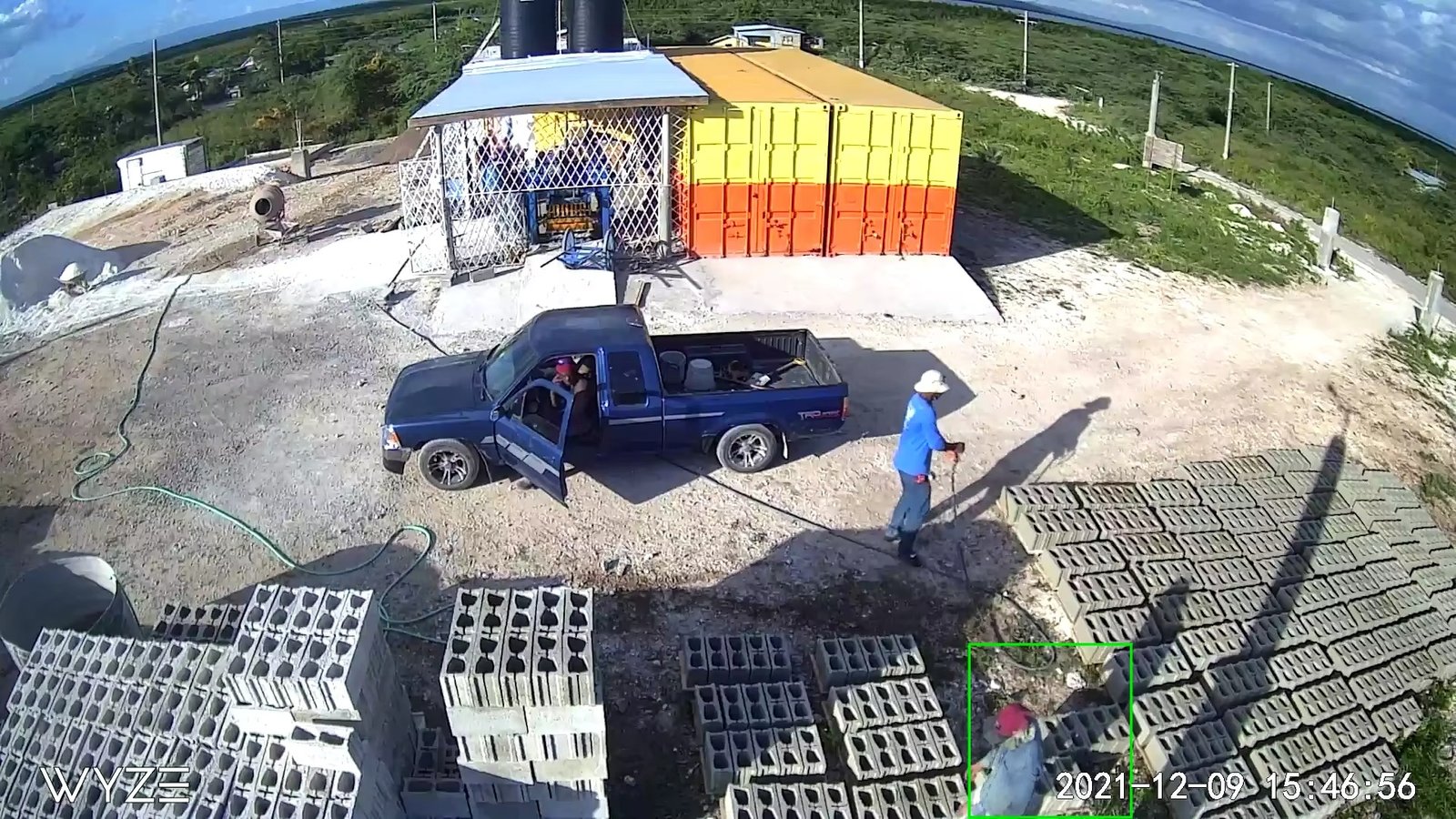
This mortar represents hidden costs. Purchase price, mixing labour, application time, and curing delays all add up.
Interlocking cement brick technology offers a proven alternative. These specially designed building materials connect without mortar in vertical joints.
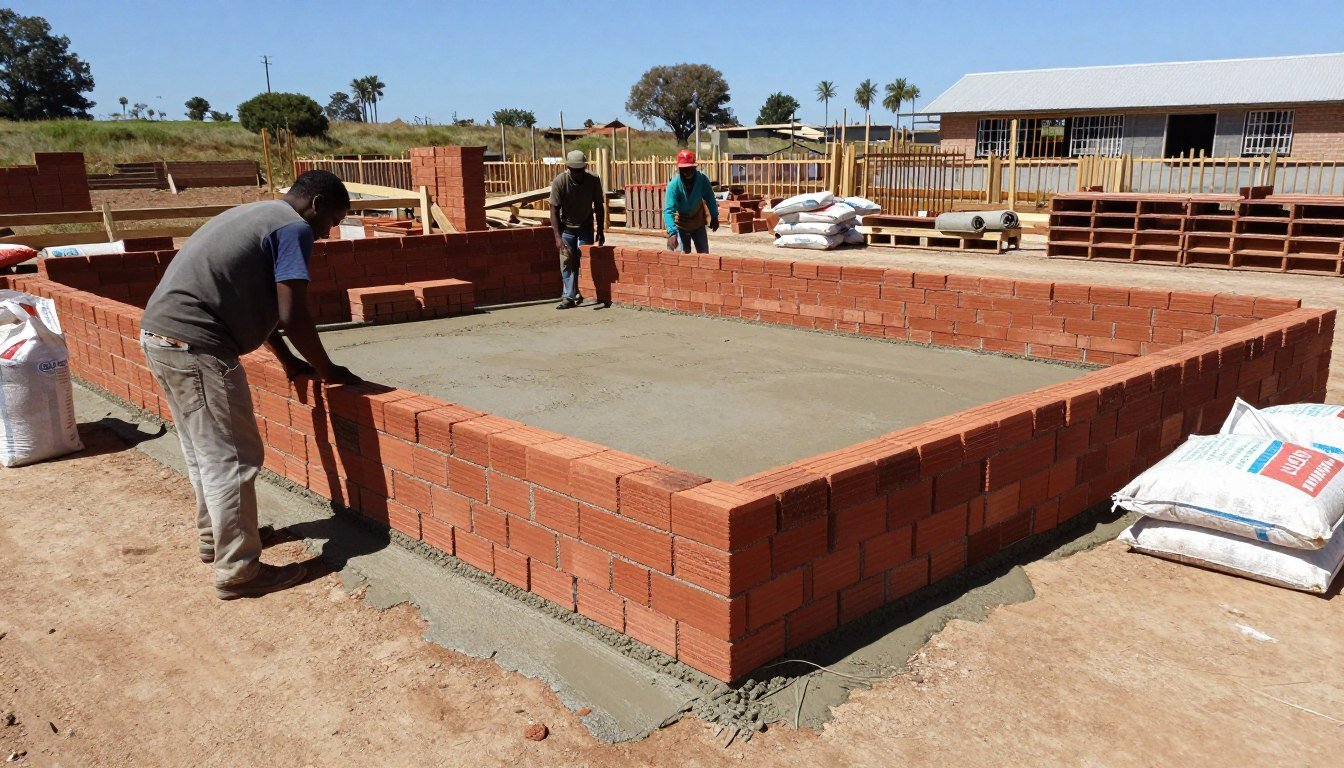
The design innovation reduces material consumption by up to seventy percent. Projects finish faster with lower overall costs.
This comprehensive guide examines interlocking soil cement bricks from multiple angles. Production methods, cost analysis, machinery requirements, and real African case studies all receive detailed attention.
Whether you operate a brick factory, manage construction projects, or consider entering the manufacturing sector, understanding this technology delivers competitive advantage.
What Makes Interlocking Cement Bricks Different
Traditional bricks rely entirely on mortar for structural connection. Each horizontal and vertical joint requires cement paste application.
Interlocking designs incorporate mechanical features into the brick itself. Protrusions and recesses create physical connections between units.

The Interlocking Mechanism
Design variations exist across manufacturers. Most systems use tongue-and-groove patterns along vertical edges.
When placed side by side, the tongue of one unit slots into the groove of its neighbor. This creates a shear-lock connection without adhesive.
Horizontal courses still require thin mortar beds. The significant savings come from eliminated vertical mortar joints.
Traditional Brick Requirements
- Mortar on all four sides of each unit
- Skilled mason labour for consistent joints
- Extended curing time between courses
- Significant cement consumption
- Higher material transport costs
Interlocking Brick Advantages
- Mortar only on horizontal beds
- Faster installation by semi-skilled workers
- Immediate stability after placement
- Reduced cement usage by 60-70%
- Lower logistics expenses
Soil Cement Composition
The term “soil cement brick” refers to the production material mix. Unlike fired clay products, these units cure through chemical reaction.
Typical composition includes local soil, cement binder, and minimal water. The ratio varies based on soil characteristics and desired strength.
A common mix uses eight parts soil to one part cement. Some formulations add sand to improve particle distribution.
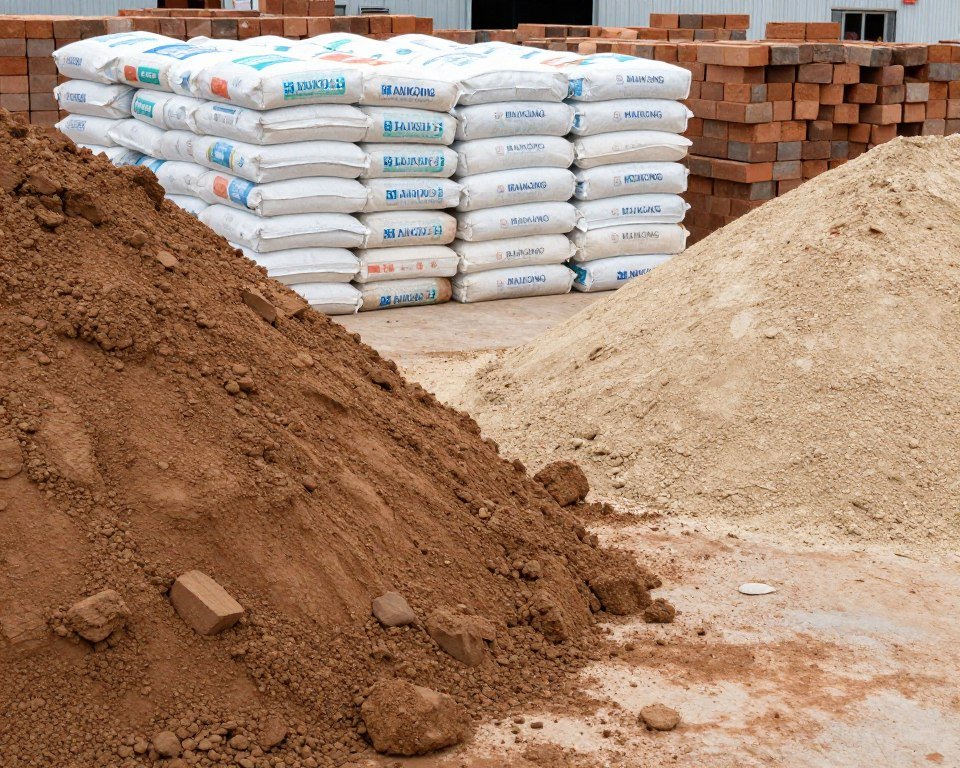
MAIKONG brick making machines compress this mixture under high pressure. The mechanical action creates density and strength without firing.
Curing occurs at ambient temperature over seven to fourteen days. Water spray during the first week ensures proper hydration.
Performance Characteristics
Well-produced soil cement bricks achieve compressive strength between 3 and 5 MPa. This meets requirements for single-story residential construction.
The building materials provide excellent thermal properties. Dense walls moderate internal temperatures in hot climates.
| Property | Interlocking Soil Cement Brick | Standard Fired Brick |
| Compressive Strength | 3-5 MPa | 7-14 MPa |
| Water Absorption | 10-15% | 8-12% |
| Thermal Conductivity | 0.46 W/mK | 0.60 W/mK |
| Production Energy | Low (no firing) | High (kiln required) |
| Installation Speed | Fast (no vertical mortar) | Standard (full mortar) |
Water resistance requires surface treatment for exposed applications. Internal walls perform well without additional protection.
The technology suits South African conditions particularly well. Abundant soil resources and sunny curing weather support production nationwide.
Calculate Your Mortar Savings with Cement Brick Interlocking Design
Financial analysis drives adoption decisions. Understanding the complete cost picture requires examining multiple expense categories.
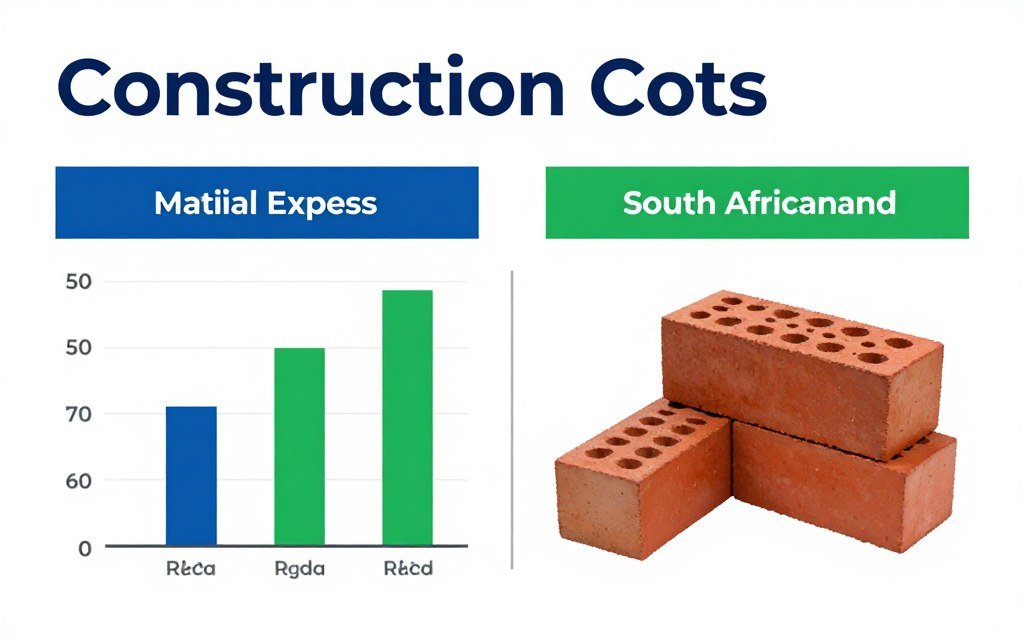
Direct material savings represent the most obvious benefit. Eliminated vertical mortar joints dramatically reduce cement consumption.
Material Cost Breakdown
A standard single-story house in South Africa requires approximately 15,000 bricks. Traditional construction uses roughly 2.5 cubic meters of mortar for this quantity.
Current cement prices in South Africa average R85 per 50kg bag. Each cubic meter of mortar requires about seven bags of cement.
Traditional approach total: 2.5 m³ × 7 bags × R85 = R1,487.50 in cement alone. Sand, water, and mixing add another R800.
Interlocking brick systems eliminate 70% of this mortar volume. Only horizontal bed joints require adhesive.
Traditional Mortar Costs (15,000 bricks)
- Cement: R1,487.50
- Sand: R600.00
- Water & mixing: R200.00
- Labour (mason rate): R3,500.00
- Total: R5,787.50
Interlocking Mortar Costs (15,000 bricks)
- Cement: R446.25 (70% reduction)
- Sand: R180.00 (70% reduction)
- Water & mixing: R60.00
- Labour (semi-skilled): R2,100.00
- Total: R2,786.25
Net savings per project: R3,001.25 on materials and labour combined. This represents a 52% cost reduction in the masonry installation phase.
Time Value Analysis
Construction speed impacts project financing costs. Faster completion reduces interest charges on development loans.
Traditional mortar joints require curing time between courses. Masons typically wait overnight before building additional height.
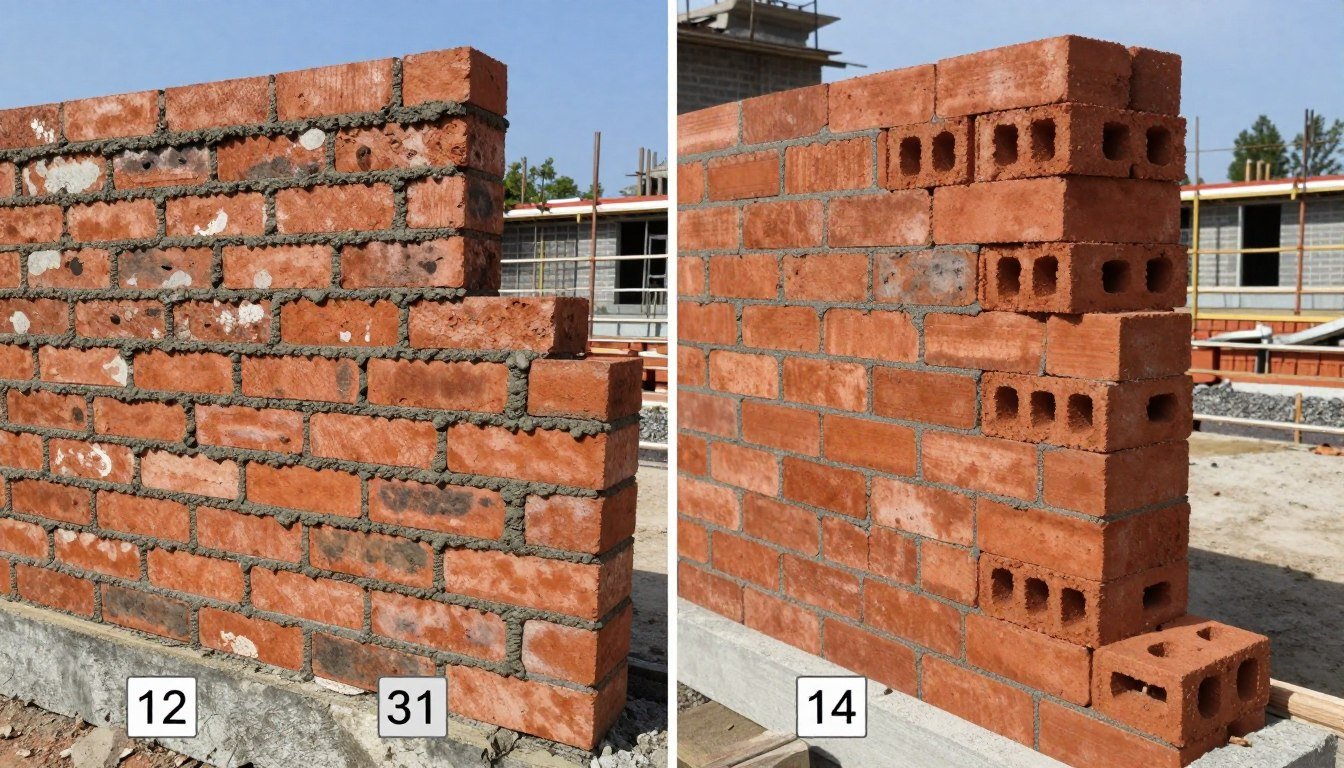
Interlocking systems achieve immediate stability. Walls can rise to full height in a single day without structural risk.
A 100 square meter house built with traditional methods takes approximately 14 working days for wall completion. The same structure using interlocking bricks finishes in 8-9 days.
Get Custom ROI Analysis for Your Project
MAIKONG provides detailed cost calculations based on your specific building requirements and local material prices. Our team helps South African developers understand complete financial implications including machinery investment recovery.
Hidden Cost Factors
Beyond direct material expenses, several secondary costs deserve consideration.
Transport logistics change significantly. Reduced mortar volume means fewer delivery trips from building materials suppliers.
Site storage requirements decrease. Less cement and sand means smaller secure storage areas and reduced theft risk.
Water consumption drops with less mortar mixing. This matters particularly in areas with municipal water restrictions.
| Cost Category | Traditional Method | Interlocking Method | Savings % |
| Cement Purchase | R1,487.50 | R446.25 | 70% |
| Sand Delivery | R600.00 | R180.00 | 70% |
| Skilled Labour | R3,500.00 | R2,100.00 | 40% |
| Water Consumption | R200.00 | R60.00 | 70% |
| Site Storage | R150.00 | R50.00 | 67% |
Environmental considerations increasingly influence project approvals. Reduced cement production demand lowers carbon footprint.
For government housing projects and sustainable development initiatives, this environmental benefit adds value beyond pure cost savings.
Scale Economics
Savings multiply across multiple units. A developer building 50 houses realizes R150,000 in mortar cost reductions alone.
Large-scale contractors often invest in their own brick production capacity. Vertical integration amplifies financial benefits.
The brick making machine price represents upfront investment. However, production cost per unit falls significantly below purchased brick rates.
How Brick Making Machines Produce Interlocking Cement Bricks
Manufacturing quality interlocking bricks requires specialized equipment. The machine design directly impacts final product precision and consistency.
Understanding production processes helps buyers select appropriate machinery for their scale and market requirements.
Machine Categories and Capabilities
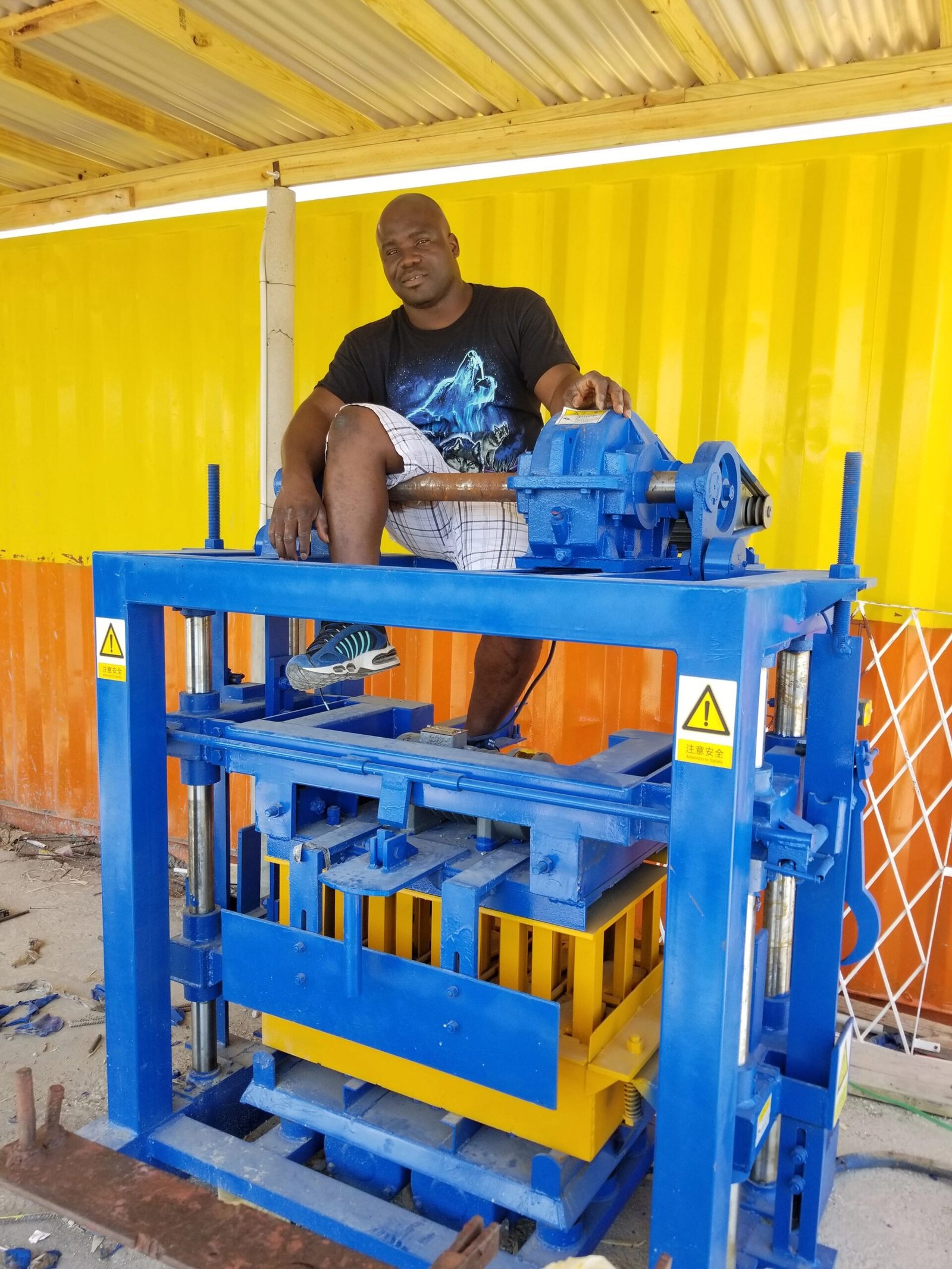
Three main categories serve different production scales. Manual brick making machines suit small workshops and rural enterprises.
These units require physical lever operation for compression. Output ranges from 500 to 1,000 bricks per day with 2-3 workers.
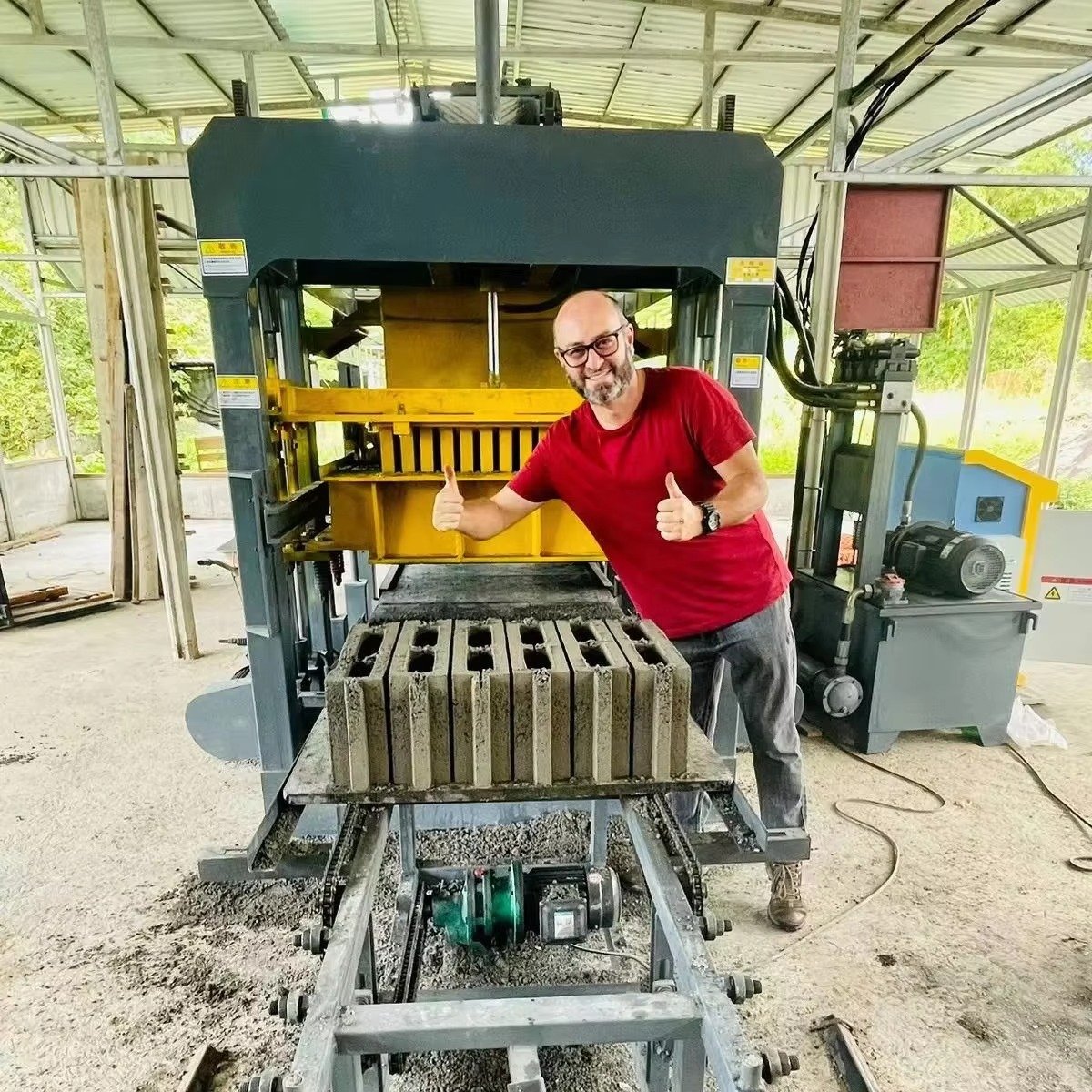
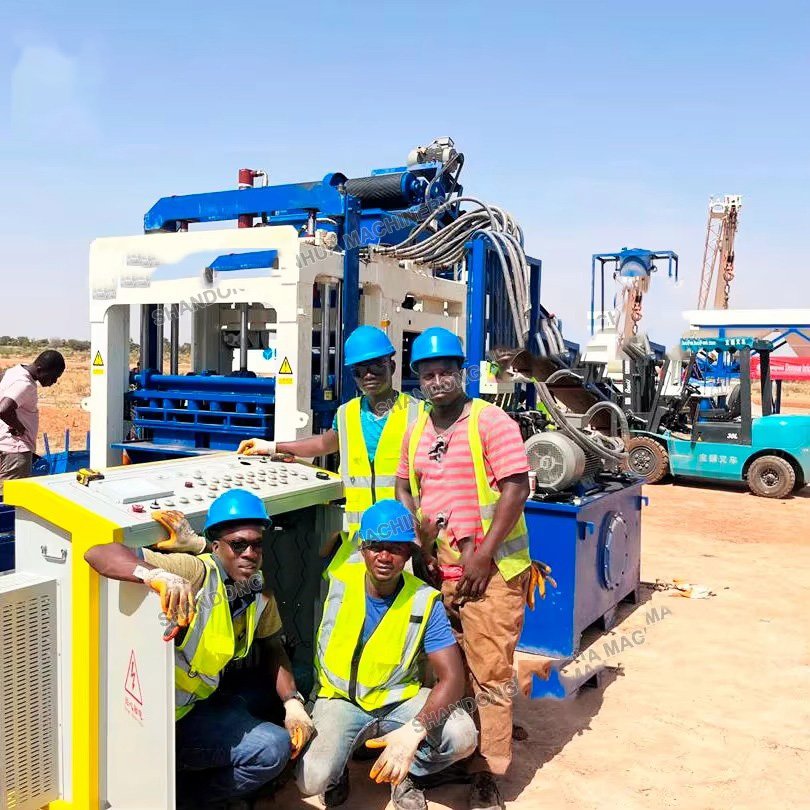
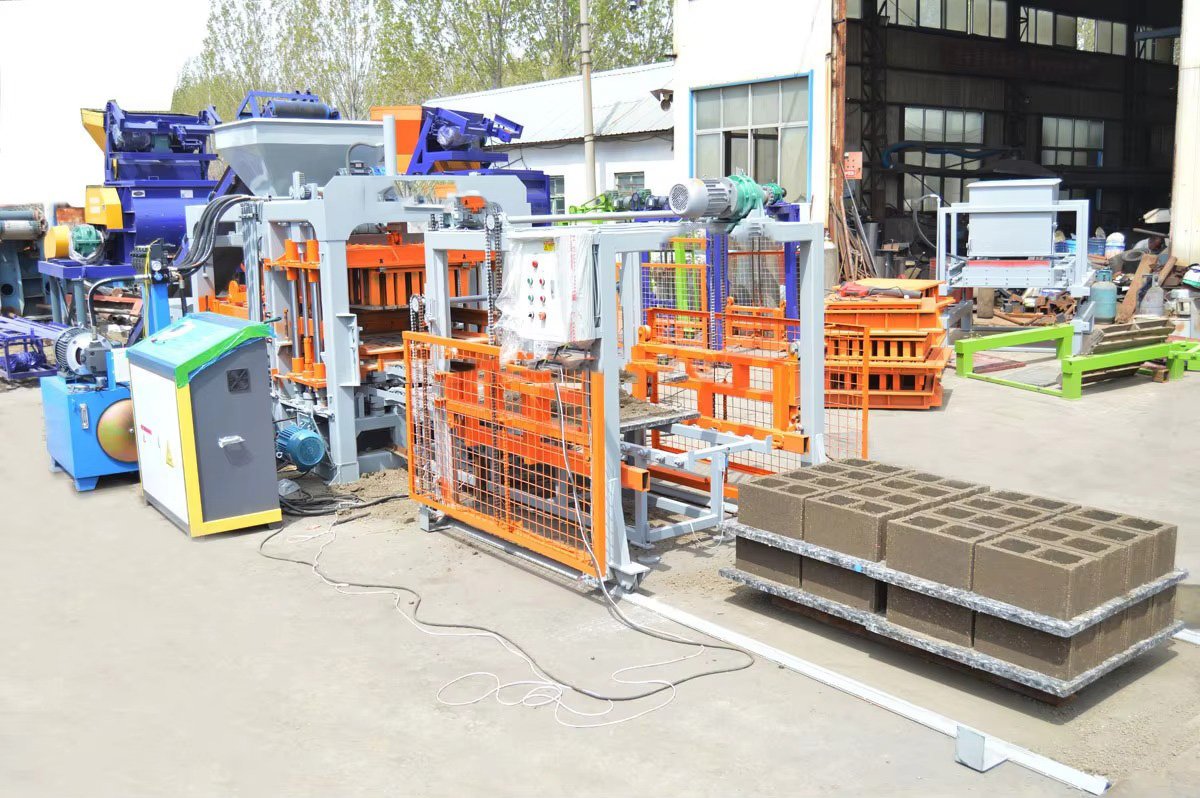
Semi-automatic systems like MAIKONG’s QT4-26 model increase productivity significantly. The four-column guide design ensures consistent compression across the mold.
QT4-26 Semi-Automatic Brick Machine
This workhorse model combines affordability with serious production capacity. The specially developed vibration box delivers strong excitation force for rapid forming.
- Daily capacity: 2,000-3,000 pieces
- Power voltage: 380V/220V AC
- Labour requirement: 2-3 people
- Workshop area: 40 m²
- Forming cycle: 25-30 seconds
- Total rated power: 12.35 KW
Automatic material dropping, push-pull die design, and automatic brick discharging systems dramatically improve efficiency over manual brick making machines.
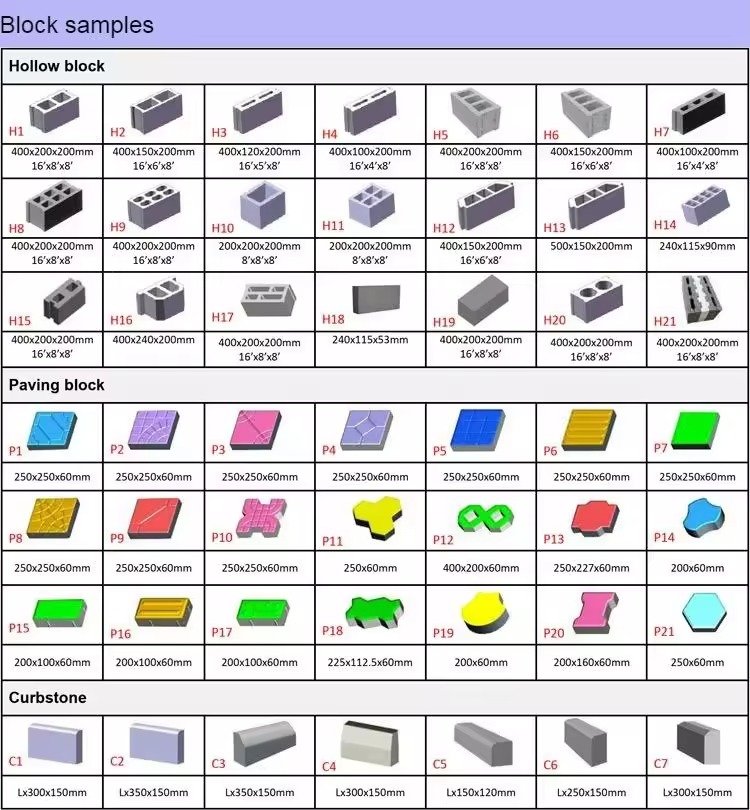
Mold changes enable production of hollow bricks, solid bricks, and plaster blocks from the same equipment base.
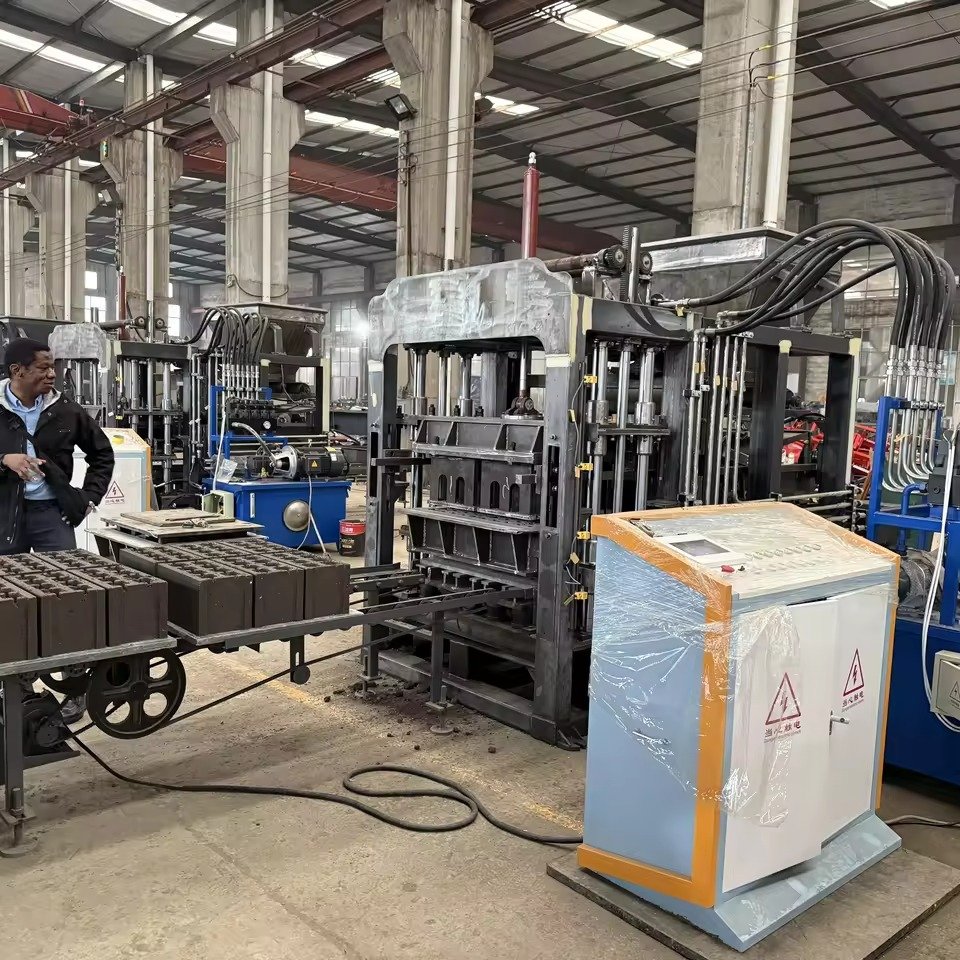
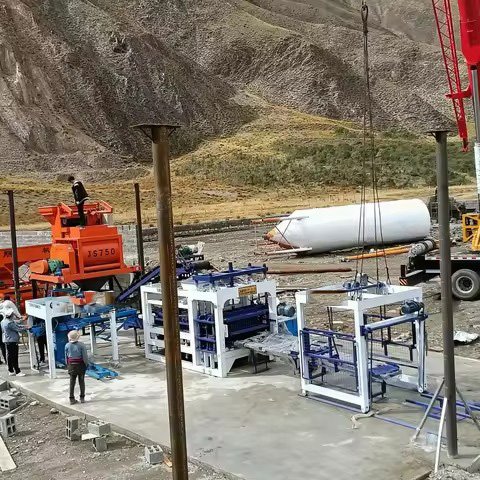
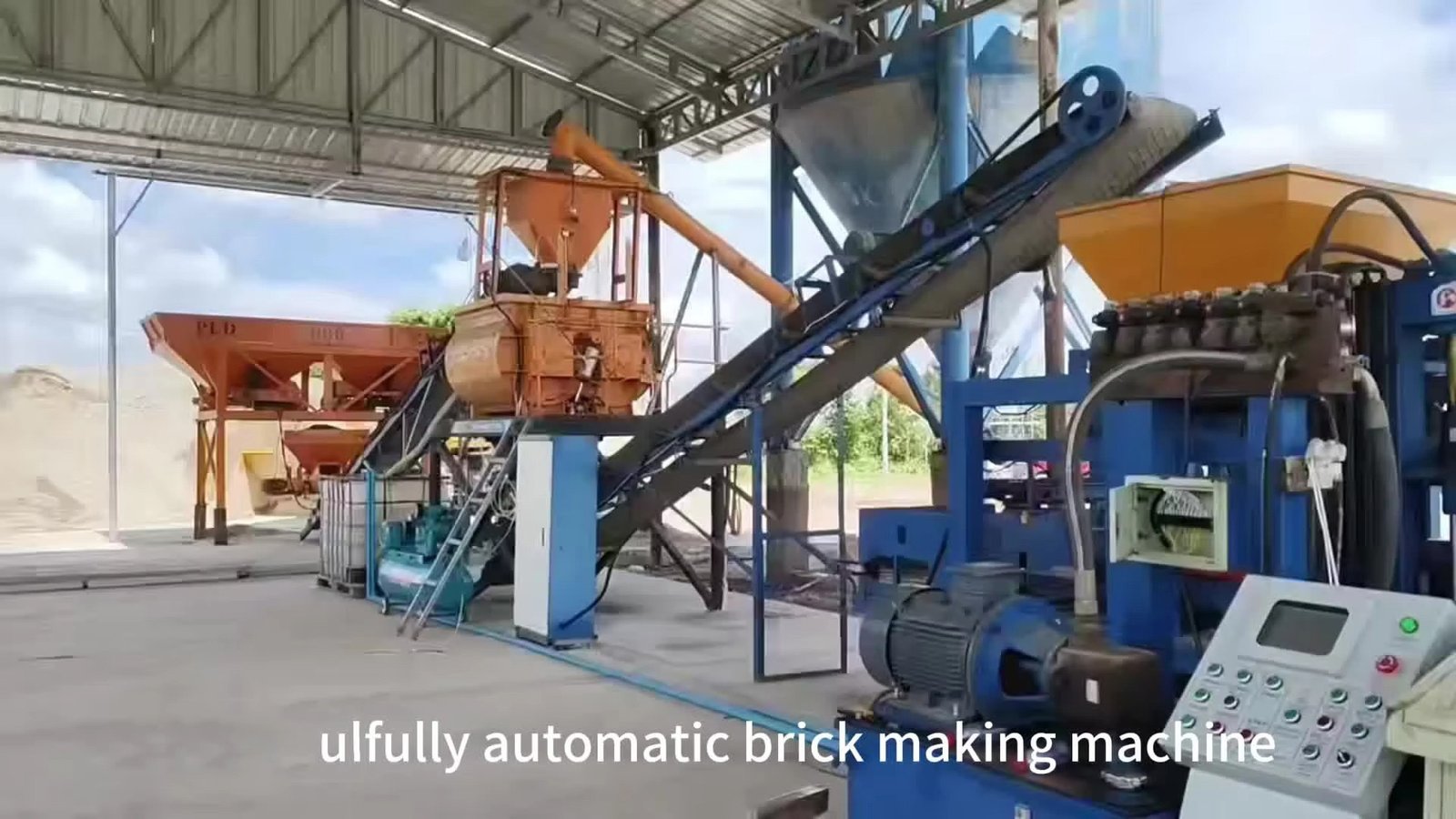
Automatic Brick Making Machine Production Line
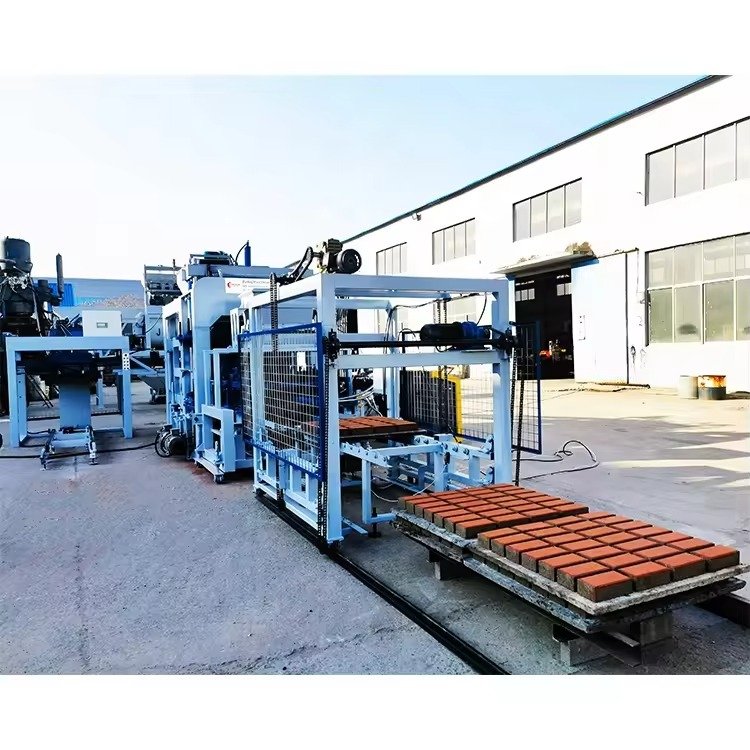
Full automation suits large-scale manufacturers serving multiple construction projects simultaneously. Every process stage integrates into a continuous flow system.
- Daily capacity: 15,000-20,000 pieces
- Fully automated batching plant
- Robotic stacking systems
- Computer-controlled mixing ratios
- Quality monitoring sensors
- Minimal labour (5-6 operators)
These brick production lines represent significant investment. Payback periods range from 18-24 months depending on market prices and production volume.
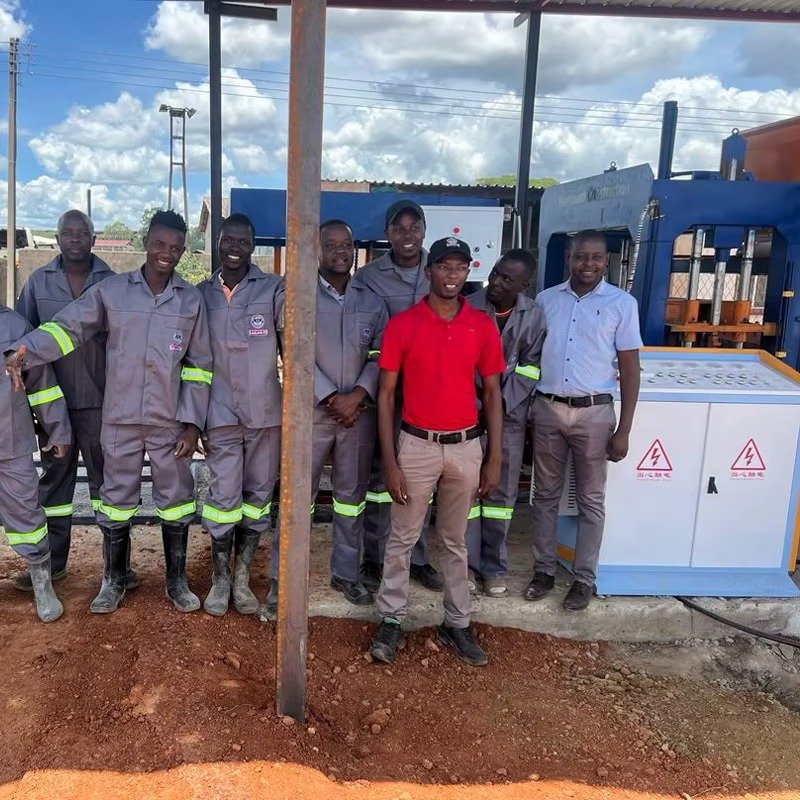
MAIKONG provides complete installation support, including foundation design, electrical setup, and operator training programs.
Production Process Stages
Regardless of automation level, cement brick manufacturing follows consistent steps. Material preparation begins the cycle.
Soil undergoes screening to remove organic matter and oversized particles. Cement and any additives mix thoroughly in specific proportions.
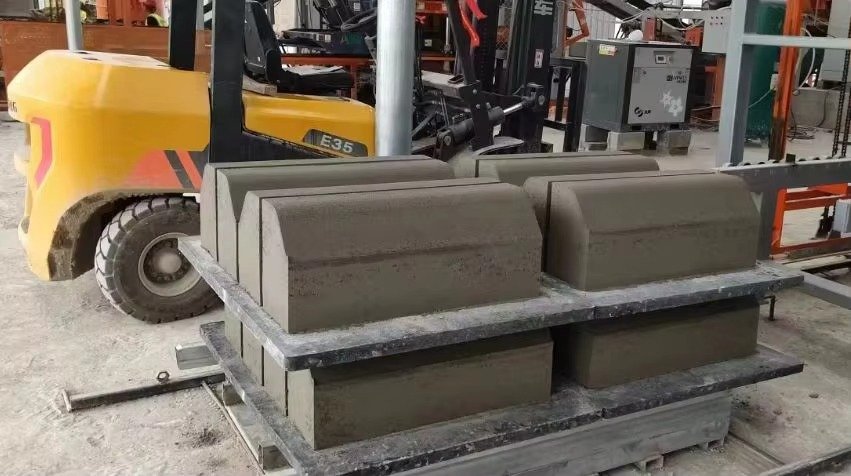
Water addition requires precision. Too much moisture creates weak bricks that slump. Insufficient water prevents proper cement hydration.
The ideal mix feels like damp sand. When squeezed firmly, it holds shape without releasing free water.
- Material Batching: Automated or manual weighing ensures consistent proportions meeting quality specifications
- Mixing: Specialized mixers achieve uniform distribution in 3-5 minutes depending on batch size
- Molding: The brick making machine applies 10-20 MPa pressure while vibrating to eliminate air pockets
- Demolding: Formed bricks transfer to curing pallets immediately after compression completes
- Initial Curing: Units rest for 24 hours before stacking to achieve initial set strength
- Water Curing: Regular spraying over 7-14 days ensures complete cement hydration
- Final Curing: Additional air curing brings bricks to full strength before delivery or use
Mold Design Importance
The interlocking profile comes entirely from mold geometry. Precision machining ensures consistent tongue-and-groove dimensions.
High-quality molds use hardened steel construction. They withstand hundreds of thousands of compression cycles without dimensional changes.
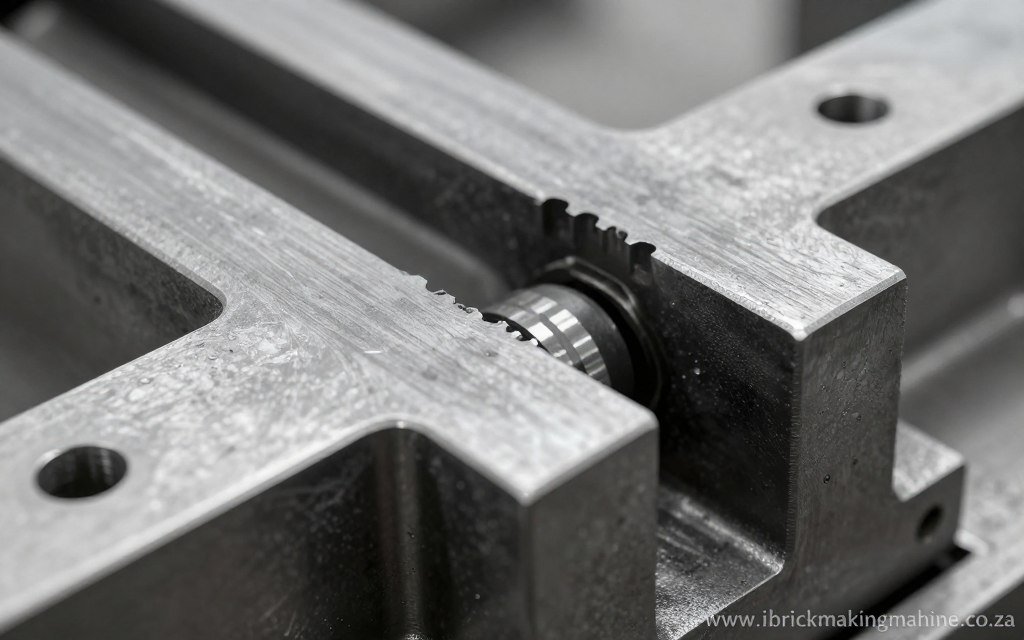
MAIKONG brick moulding machines accommodate various mold designs. Customers can produce different brick profiles from the same machine base.
Standard interlocking profiles include single-interlock (tongue on one edge), double-interlock (tongues on opposing edges), and multi-interlock designs for specialized applications.
Quality Control Measures
Consistent production requires monitoring at multiple stages. Material moisture content testing happens before each production shift.
Sample bricks undergo dimensional checks every 100 units. Thickness, width, and interlock profile measurements must stay within ±2mm tolerance.
Compressive strength testing follows SANS standards. Representative samples cure for seven days before laboratory testing.
South African Standard Compliance: Interlocking soil cement bricks should meet SANS 1215 specifications for masonry units. Minimum compressive strength of 3 MPa applies for load-bearing walls in single-story construction.
Manufacturers targeting government housing projects must demonstrate SANS certification. Independent testing facilities across South Africa provide verification services.
Production Economics
Operating costs include raw materials, electricity, labour, and equipment maintenance. A semi-automatic setup producing 2,500 bricks daily faces these typical expenses:
| Cost Component | Daily Amount | Monthly (25 days) |
| Soil (8:1 ratio) | R180 | R4,500 |
| Cement | R425 | R10,625 |
| Water | R35 | R875 |
| Electricity | R150 | R3,750 |
| Labour (3 workers) | R450 | R11,250 |
| Maintenance | R60 | R1,500 |
| Total | R1,300 | R32,500 |
Monthly production reaches 62,500 bricks. Total operating cost per brick: R0.52.
Wholesale prices for interlocking cement bricks in South Africa range from R1.80 to R2.50 depending on region and quality.
Gross profit margin: R1.28 to R1.98 per brick. Monthly gross profit potential: R80,000 to R123,750.
Equipment investment recovery typically requires 8-14 months of operation at this production level.
Successful Cement Brick Projects Across Africa
Real-world implementation provides valuable insights. Several African nations have embraced interlocking brick technology for housing and infrastructure.
These case studies demonstrate practical application across different contexts and scales.
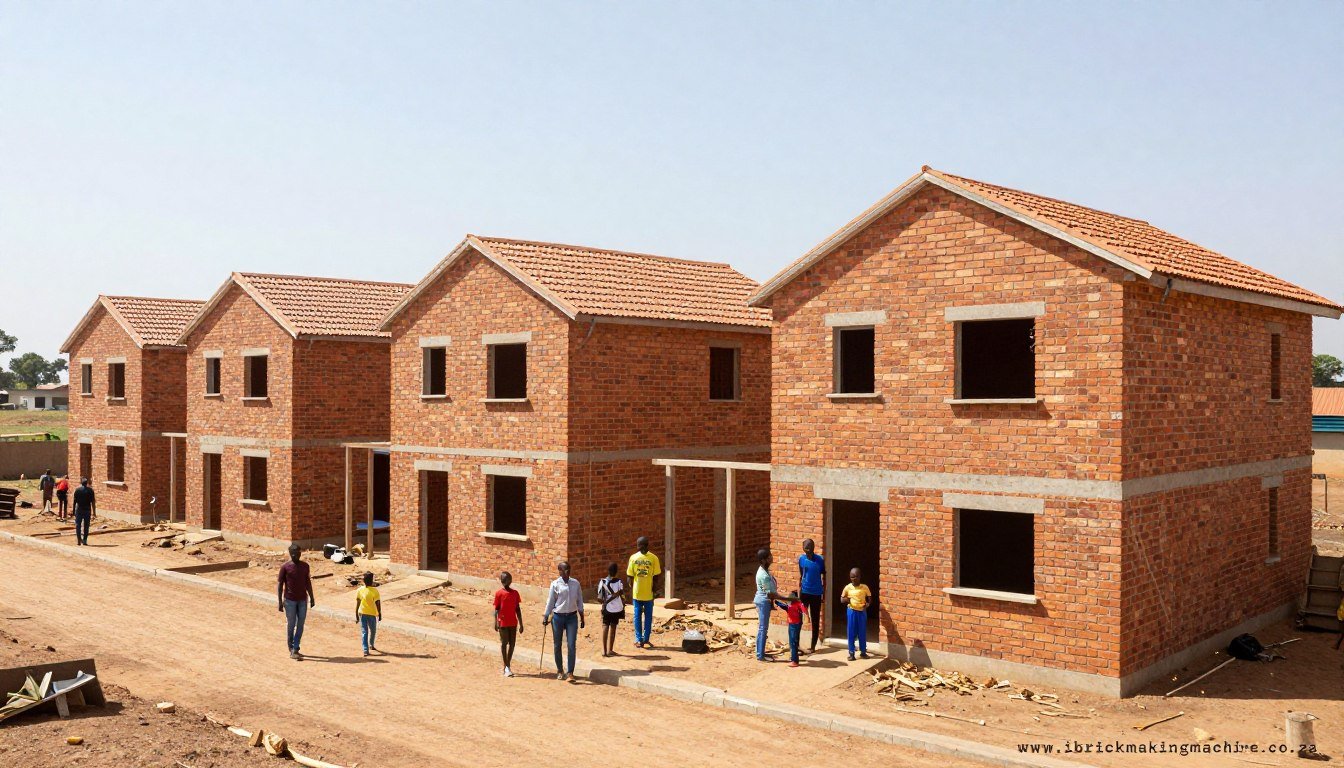
Ghana Affordable Housing Initiative
A government-sponsored program in Ghana’s Ashanti Region deployed MAIKONG semi-automatic brick making machines across five production sites.
The initiative aimed to construct 2,000 housing units within three years. Interlocking cement brick technology reduced per-unit costs by 38% compared to conventional building methods.
Local soil composition proved ideal after simple screening. Cement content settled at 7% by weight for achieving required 4 MPa strength.

Project Outcomes
- Total houses completed: 2,150 units (exceeding target)
- Average construction time: 6 weeks per 60 m² unit
- Local employment: 180 workers trained in production and installation
- Cement consumption: 65% less than traditional methods
- Equipment stock: 12 QT4-26 machines still in active service after four years
- Community satisfaction: 92% approval rating in resident surveys
The program’s success led to expansion into three additional regions. MAIKONG provided ongoing technical support through local partner workshops.
Nigeria Commercial Development
A private developer in Lagos implemented interlocking brick construction for a mixed-use complex. The 15-hectare site required over 4 million bricks.
Rather than purchasing from external suppliers, the developer invested in an automatic brick production line from MAIKONG.
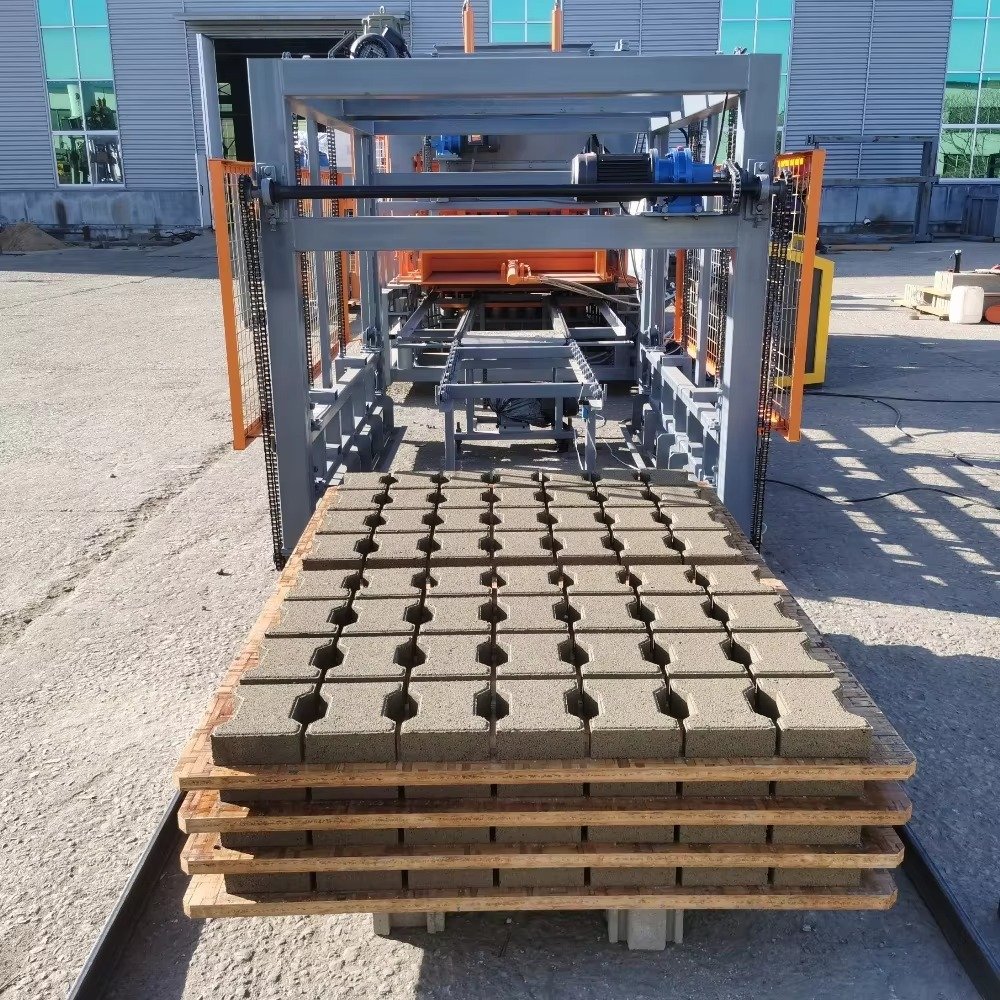
The automated system produced 18,000 bricks daily. On-site production eliminated transport costs from distant brick stores and ensured consistent quality.
Financial analysis revealed remarkable economics. The production line cost approximately R2.8 million including installation and training.
| Scenario | Purchase Cost | Production Cost | Savings |
| 4 Million Bricks @ R2.20 | R8,800,000 | R2,800,000 (equipment) + R2,400,000 (operating) = R5,200,000 | R3,600,000 |
Beyond this initial project, the developer retained the equipment. Subsequent developments benefit from brick production at pure operating cost.
The interlocking design also accelerated construction schedules. The commercial complex opened four months ahead of original projections.
Kenya Rural Development Program
An international development organization partnered with Kenyan communities to establish local brick production cooperatives.
MAIKONG supplied small brick making machines appropriate for village-scale operations. Each cooperative received training in production, quality control, and business management.
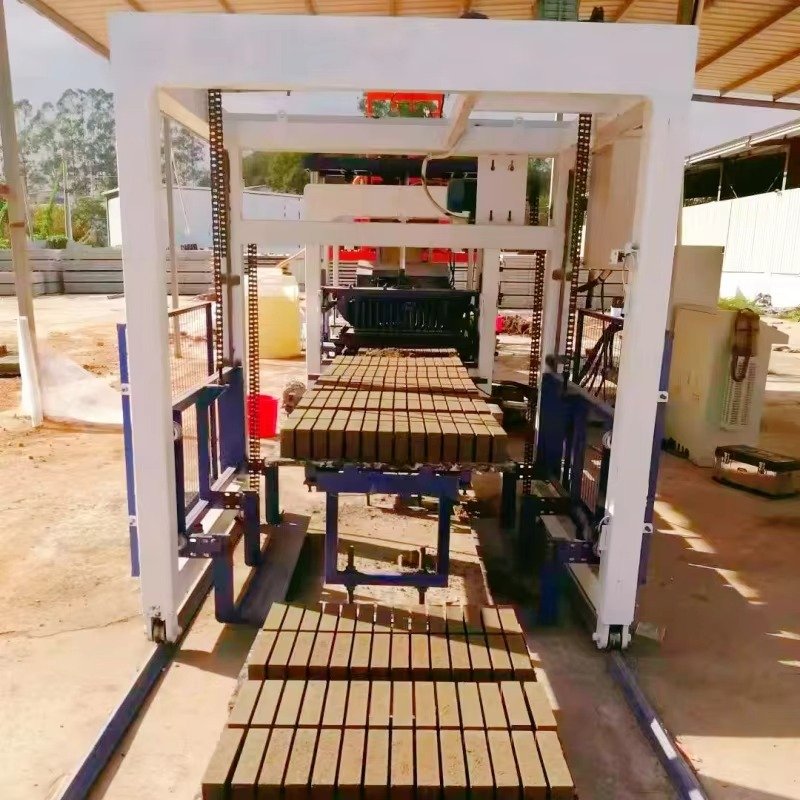
The program addressed multiple development objectives simultaneously. Local housing improvement, income generation, and skills development all advanced together.
Soil cement bricks replaced traditional wattle-and-daub construction. The improved building materials provided better durability and reduced maintenance requirements.
Community Impact: Twelve village cooperatives now operate independently after initial three-year support period. Average monthly cooperative income reaches 180,000 Kenyan shillings (approximately R25,000), distributed among 8-12 members per cooperative.
Similar to MAIKONG’s installation in South Africa’s Eastern Cape, where a community cooperative serves local construction needs while creating employment for fourteen residents.
The Eastern Cape operation produces 1,800 bricks daily using a QT4-26 model. Production focuses on stock quality standard units suitable for residential construction.
Common Success Factors
Analysis of these implementations reveals shared elements contributing to positive outcomes.
Adequate Training: All successful projects invested in comprehensive operator training. MAIKONG provides initial training as part of equipment delivery, but ongoing skill development matters.
Quality Control Systems: Consistent production requires systematic testing and monitoring. Successful operations establish clear standards and regular sampling procedures.
Local Soil Testing: Material characteristics vary by location. Proper analysis determines optimal cement ratios and any required additives.
Market Development: Production capacity must align with reliable demand. Successful manufacturers either supply ongoing projects or develop distribution networks to multiple customers.
Technical Support Access: Equipment issues occasionally arise. Quick access to spare parts and technical advice prevents extended downtime.
Partner with MAIKONG as a South African Distributor
The growing South African construction sector creates opportunities for equipment suppliers and service providers.
MAIKONG actively seeks established partners to represent our brick making machine range throughout South Africa.

Distributor Benefits and Support
Partner arrangements provide multiple revenue streams. Equipment sales represent the primary opportunity, but service contracts and spare parts generate ongoing income.
MAIKONG’s comprehensive support package includes technical training, marketing materials, and after-sales assistance.
What MAIKONG Provides
- Protected territory assignments (provincial or regional)
- Attractive dealer margins (28-35% depending on volume)
- Complete technical training for your team
- Marketing materials in English and local languages
- Demonstration unit programs
- Direct factory support for complex installations
- Genuine spare parts supply at preferential rates
- Customer financing assistance programs
Ideal Partner Profile
- Existing business in construction equipment or building materials
- Established customer relationships with contractors or developers
- Technical service capabilities or willingness to develop them
- Workshop facilities for demonstrations and minor repairs
- Sales team able to conduct site assessments
- Financial capacity to maintain demonstration stock
- Understanding of South African construction market dynamics
Market Opportunity Analysis
South Africa’s housing deficit exceeds 2.3 million units according to recent government estimates. Affordable construction technology directly addresses this need.
The interlocking brick concept aligns perfectly with sustainable building initiatives gaining traction nationwide.
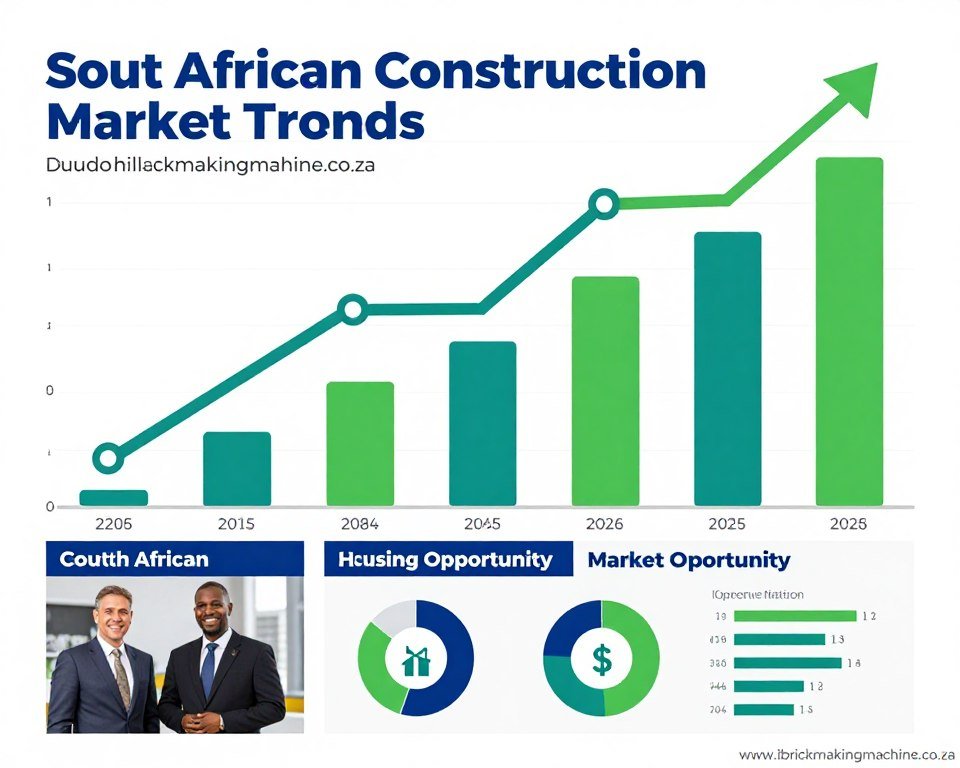
Government housing projects increasingly specify locally-produced materials. On-site brick production capabilities provide competitive advantages in tender submissions.
Private sector development also expands. Shopping centers, industrial parks, and residential estates all require massive brick quantities.
Competitive Advantages
MAIKONG equipment offers distinct positioning versus alternatives in the South African market.
Price Competitiveness: Our brick making machine prices in South Africa undercut European brands by 35-40% while matching or exceeding specification benchmarks.
This cost advantage enables dealers to offer attractive financing terms. Customers achieve faster ROI compared to premium-priced alternatives.
MAIKONG Advantages
- Factory-direct pricing eliminates intermediary markups
- Full product range from manual to fully automatic systems
- Proven African market experience (installations in 15+ countries)
- WhatsApp technical support in real-time (24/7 availability)
- Customization capabilities for specific requirements
- Comprehensive spare parts stock maintained regionally
- Training provided in customer’s language preference
Competitor Limitations
- European brands priced 40-60% higher than MAIKONG equivalents
- Limited model ranges forcing customers into oversized equipment
- Slow spare parts delivery from overseas warehouses
- Technical support hampered by time zone differences
- Inflexible designs requiring expensive custom tooling
- After-sales service depends on third-party agents
Revenue Potential
Active distributors in comparable markets generate substantial annual turnover. Average dealer selling 15-20 machines yearly realizes these approximate figures:
| Machine Category | Units/Year | Avg Margin | Annual Revenue |
| Manual Brick Making Machine | 8 | R12,000 | R96,000 |
| Semi-Automatic (QT4-26 type) | 10 | R85,000 | R850,000 |
| Automatic Production Line | 2 | R420,000 | R840,000 |
| Spare Parts & Service | – | – | R180,000 |
| Total Annual Revenue | – | – | R1,966,000 |
These figures represent achievable targets for established dealers with active sales teams. New distributors typically reach this level during year two or three of partnership.
Become a MAIKONG Partner in South Africa
We seek committed partners who value long-term business relationships. MAIKONG provides the products, training, and support systems. You provide local market knowledge and customer relationships. Together, we build profitable sustainable businesses while advancing affordable housing solutions across South Africa.
Visit our Distributor information page for complete partnership details and application process.
Getting Started
Partnership development follows a structured process ensuring mutual suitability.
Initial discussions cover your market area, existing customer base, and business capabilities. We assess alignment between your strengths and MAIKONG’s requirements.
Qualified candidates receive detailed information including price lists, margin structures, and territory definitions.
Demonstration equipment programs help new partners establish market presence. A working QT4-26 unit enables live customer demonstrations far more effectively than brochures alone.
Technical training typically requires one week at our facilities or arranged locally if multiple partners join simultaneously. Your team learns operation, maintenance, troubleshooting, and customer training delivery.
Ongoing support continues throughout the partnership. Regular WhatsApp contact, quarterly business reviews, and continuous product updates maintain strong collaboration.
Why South African Builders Choose MAIKONG Brick Machines
Equipment selection involves multiple factors beyond initial purchase price. Total cost of ownership includes maintenance, downtime, support quality, and productive lifespan.
MAIKONG’s comprehensive approach addresses each element systematically.
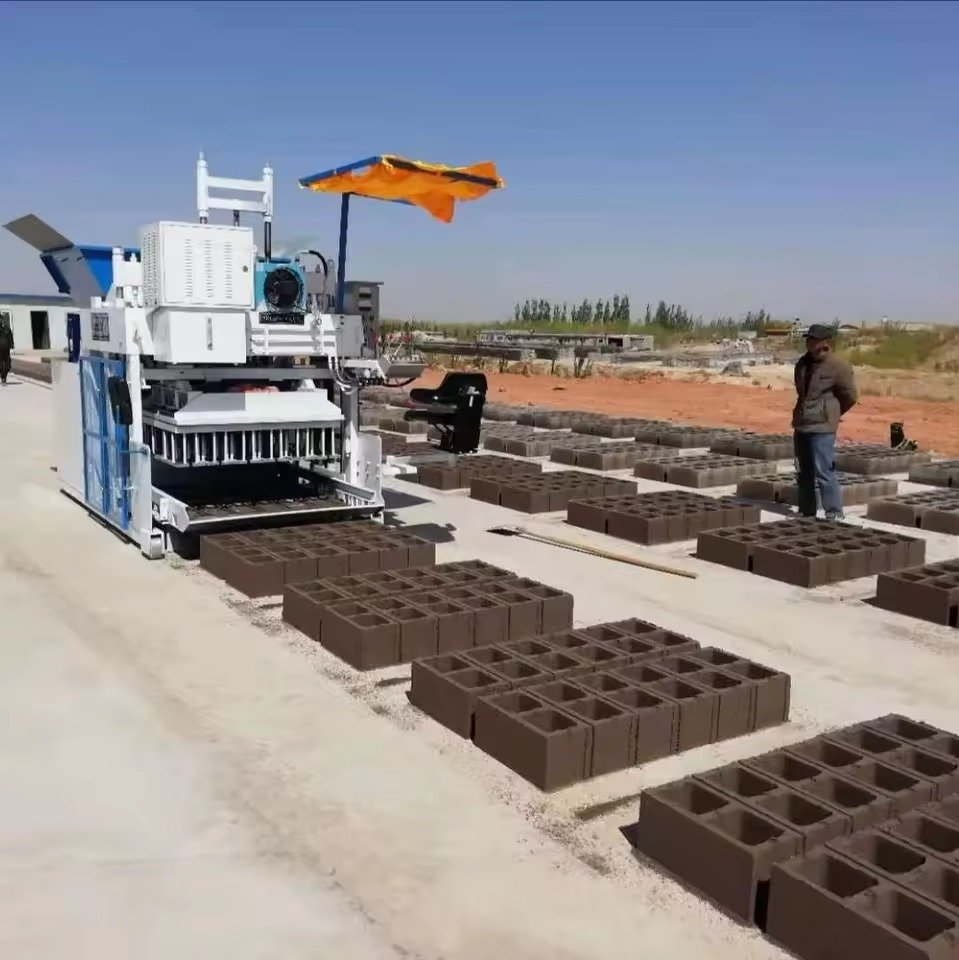
Performance and Durability
Machine longevity depends heavily on component quality. MAIKONG uses hardened steel for all high-wear areas including molds, compression plates, and guide columns.
The specially developed vibration system delivers consistent performance across production cycles. High-power motors maintain excitation force even as concrete mix density varies.
Expected service life exceeds 10 years with proper maintenance. Many customers report QT4-26 machines operating productively after 15+ years.
Pricing Structure
Transparent pricing helps customers make informed decisions. MAIKONG provides detailed quotations breaking down all cost components.
Our brick making machine price list for South Africa includes equipment, delivery to major ports, installation assistance, and initial training.
Brick making machine prices in South Africa vary based on model and configuration. Representative ranges as of 2024:
| Machine Type | Daily Capacity | Price Range (ZAR) | Best Application |
| Manual Brick Making Machine | 500-1,000 pcs | R35,000 – R65,000 | Small workshops, rural production |
| Semi-Automatic (QT4-26) | 2,000-3,000 pcs | R285,000 – R340,000 | Medium-scale commercial production |
| Automatic Brick Making Machine | 8,000-12,000 pcs | R1,450,000 – R2,100,000 | Large factories, contractor-owned |
| Complete Production Line | 15,000-20,000 pcs | R2,800,000 – R4,200,000 | Industrial-scale manufacturing |
Financing options help customers manage capital requirements. Partner banks offer equipment loans specifically for brick making machine purchases.
Used equipment occasionally becomes available. Second hand brick making machine sale opportunities provide entry points for budget-conscious buyers.
However, used machinery requires careful inspection. MAIKONG offers certified refurbishment services bringing older equipment to like-new condition with warranty coverage.
Operational Convenience
Daily operation determines overall productivity. MAIKONG designs emphasize user-friendly controls and minimal complexity.
The control cabinet on QT4-26 and similar models uses simple push-button operation. Workers learn complete cycles within hours of initial training.
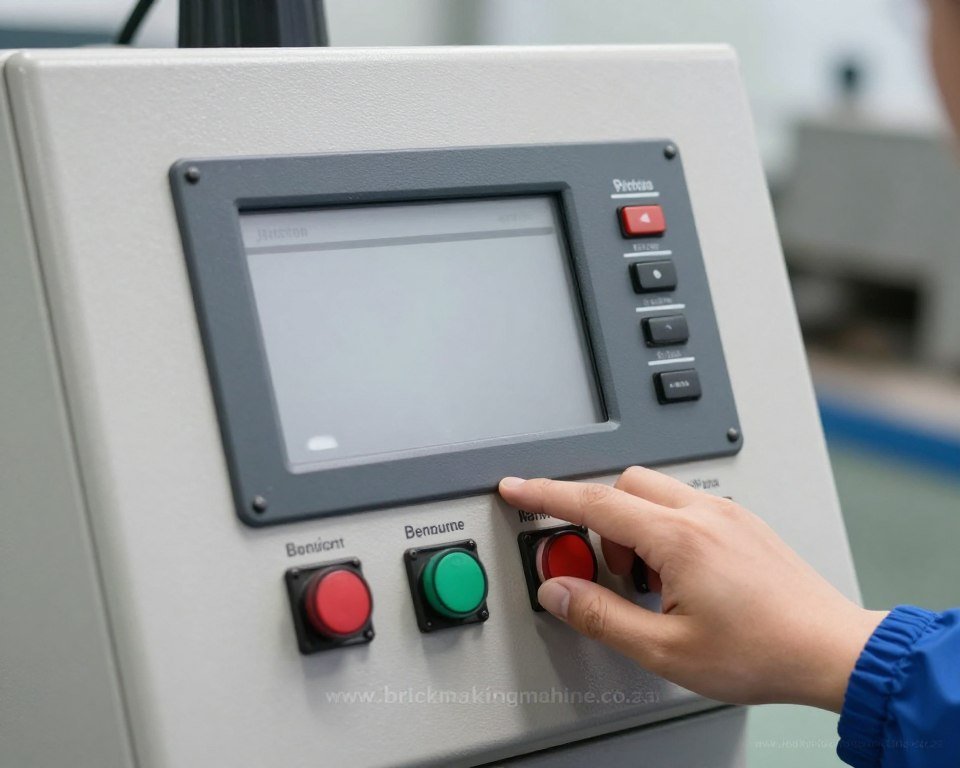
Automatic material feeding systems reduce manual handling. Raw mix drops directly into the mold cavity at the press of a button.
Finished brick discharge happens automatically after forming completes. The next pallet moves into position without operator intervention.
Mold changes require no special tools on most models. Standard brick profiles swap in under 30 minutes.
After-Sales Support Excellence
Equipment inevitably requires maintenance and occasional repairs. MAIKONG’s support infrastructure ensures minimal production interruption.
WhatsApp technical assistance provides immediate access to experienced engineers. Most issues resolve through remote guidance avoiding service call costs.
24/7 Technical Support in English – WhatsApp Our Team
Spare parts ship from regional stock points. Common wear components like molds, vibration motors, and hydraulic seals typically arrive within 3-5 business days.
On-site service visits happen when remote assistance proves insufficient. MAIKONG maintains service partnerships across South Africa’s major centers.
Customization Capabilities
Standard products serve most applications well. However, special requirements occasionally arise.
MAIKONG’s OEM services accommodate custom specifications. Voltage modifications, special brick sizes, and branded machine colors all fall within our capabilities.
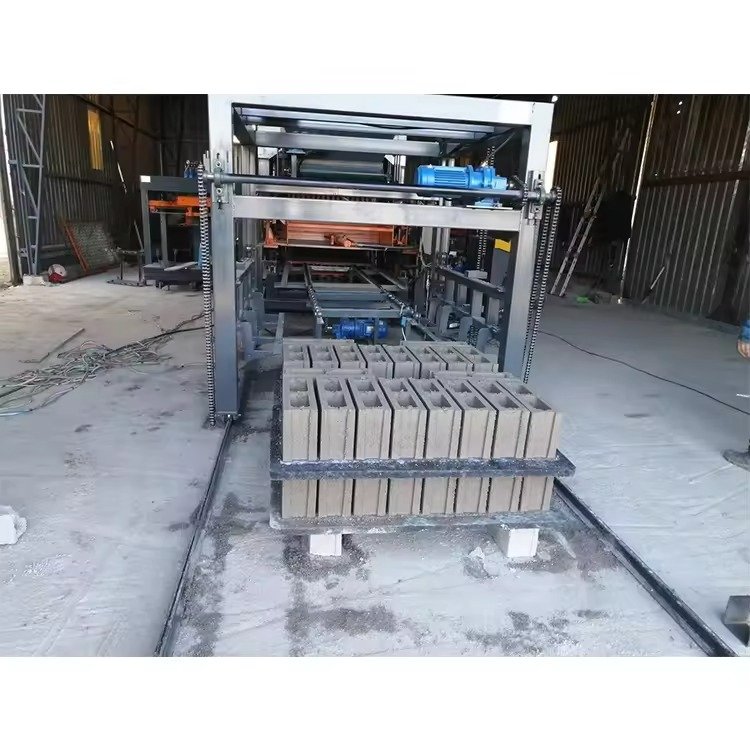
Large distributors often request branded equipment. We apply your company name and colors creating distinctive market identity.
Software customization includes language localization. Control interfaces can display in Afrikaans, Zulu, or other South African languages upon request.
Partner Profitability
Distributors and dealers achieve sustainable margins selling MAIKONG equipment. Our competitive prices allow adequate markup while remaining attractive to customers.
Support programs reduce partner costs. Technical training, marketing materials, and demonstration equipment all come without additional charges.
The complete product range enables selling into diverse market segments. From small startups needing manual machines to large developers requiring automatic production lines, every customer category finds suitable options.
Recurring revenue from spare parts and service contracts builds stable long-term income. Equipment sold today generates parts business for 10-15 years afterward.
Customer satisfaction drives referral business. Happy clients recommend MAIKONG to colleagues and contractors they work with.
Frequently Asked Questions About Interlocking Cement Bricks
Can interlocking bricks be used for two-story buildings?
Yes, with proper engineering design. Interlocking soil cement bricks achieving 4-5 MPa compressive strength suit two-story residential construction.
Critical factors include foundation design, wall thickness, and reinforcement placement. Structural engineers should verify designs against local building codes.
Some builders add horizontal reinforcement every few courses for additional strength. This common practice in earthquake-prone regions applies equally to conventional masonry.
How does brick making machine production compare to buying bricks?
Economics favor on-site production for projects requiring 50,000+ units. The break-even point varies based on local brick prices and transport costs.
Typical calculations show production costs between R0.50-0.70 per brick using semi-automatic equipment. Purchased bricks cost R1.80-2.50 depending on location.
Equipment investment recovers through savings on first large project. Subsequent work benefits from production at pure operating cost.
What maintenance do brick machines require?
Daily maintenance involves cleaning molds and lubricating moving parts. This takes 15-20 minutes at shift end.
Weekly tasks include checking hydraulic oil levels, inspecting electrical connections, and verifying vibration motor function.
Monthly service examines wear components like mold surfaces and guide bushings. Replacement happens when tolerances exceed specifications.
Annual comprehensive inspection covers structural components, rewiring if needed, and complete hydraulic system service. Budget approximately R8,000-12,000 for professional annual maintenance.
Can different brick types be made on one machine?
Absolutely. Mold changes enable production of various brick profiles from the same machine base.
MAIKONG machines accommodate molds for interlocking bricks, standard plaster bricks, hollow blocks, paving blocks, and decorative units.
Most manufacturers maintain 2-3 mold sets. They produce different products based on current order requirements.
Mold investment ranges from R15,000 to R45,000 depending on complexity. This flexibility significantly improves equipment utilization.
Do I need special skills to operate brick making equipment?
No advanced technical knowledge required. MAIKONG machines use intuitive controls suitable for workers with basic education.
Initial training covers operation, safety procedures, quality checking, and basic troubleshooting. Most operators achieve competency within 3-5 days.
Reading ability and basic mathematics help with mix calculations and production records. However, experienced workers often develop these skills on the job.
How long do interlocking cement bricks last?
Properly produced soil cement bricks demonstrate excellent durability. Structures built 30-40 years ago using this technology remain sound today.
Critical factors affecting lifespan include adequate cement content (minimum 6%), proper curing (14 days minimum), and appropriate surface protection for exterior applications.
Soil cement continues strengthening over time through ongoing hydration. Five-year-old bricks typically exceed initial strength specifications.
What electrical supply do brick machines need?
Most MAIKONG models operate on standard industrial three-phase power. The QT4-26 requires 380V or 220V AC depending on motor configuration.
Total power consumption runs approximately 12-15 kW during production cycles. Actual electricity costs average R150-200 per production day.
Installation requires appropriate circuit breakers and grounding. Local electricians familiar with industrial equipment handle setup easily.
Generator operation is possible for off-grid locations. A 20 kVA generator provides adequate capacity for semi-automatic models.
Making the Right Choice for Your Brick Production Needs
Interlocking soil cement brick technology delivers proven cost savings. The 60-70% reduction in mortar consumption creates immediate project benefits.
Beyond material costs, faster construction timelines and reduced labour requirements compound the economic advantages.
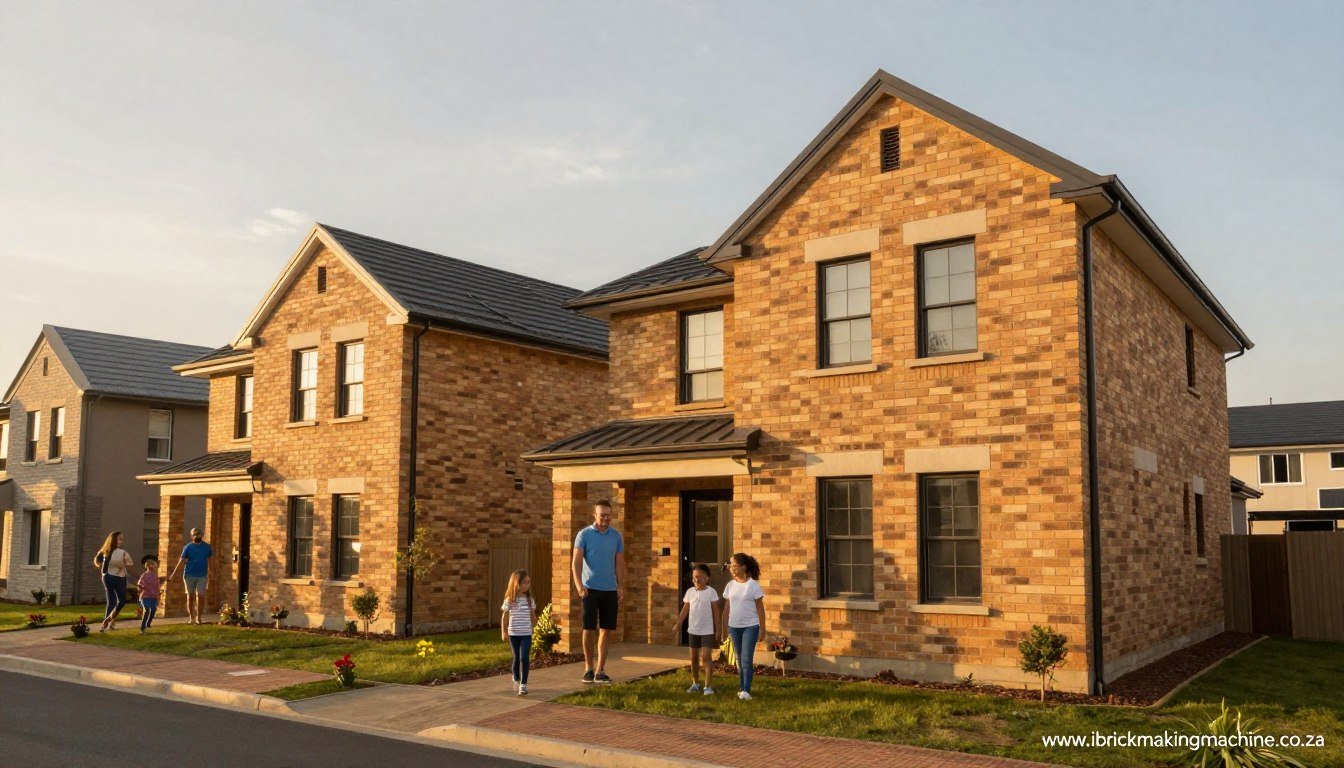
For manufacturers, brick making machines offer profitable business opportunities. Market demand continues growing as awareness spreads about interlocking technology benefits.
MAIKONG provides complete solutions from equipment supply through ongoing technical support. Our 20+ years manufacturing experience ensures reliable machinery backed by comprehensive service.
South African partners gain competitive advantages through our pricing structure, product range, and commitment to customer success.
Whether you operate construction projects seeking cost reduction, manage a brick factory pursuing efficiency gains, or consider entering the manufacturing sector, interlocking cement brick technology deserves serious evaluation.
Start Saving on Mortar Costs Today
MAIKONG’s team stands ready to discuss your specific requirements. Whether you need equipment for a single large project or plan to establish ongoing production capacity, we provide expert guidance tailored to South African conditions.
Our technical specialists answer questions about soil suitability, production economics, equipment selection, and business planning. All consultations come without obligation or cost.
Email: Lucy@ibrickmakingmachine.co.za
Website: https://ibrickmakingmachine.co.za
Transform your construction approach with proven interlocking brick technology. Reduce costs, accelerate schedules, and build sustainable structures that serve South African communities for generations.
Contact MAIKONG today. Let’s discuss how our brick making machines can advance your goals while delivering exceptional value.